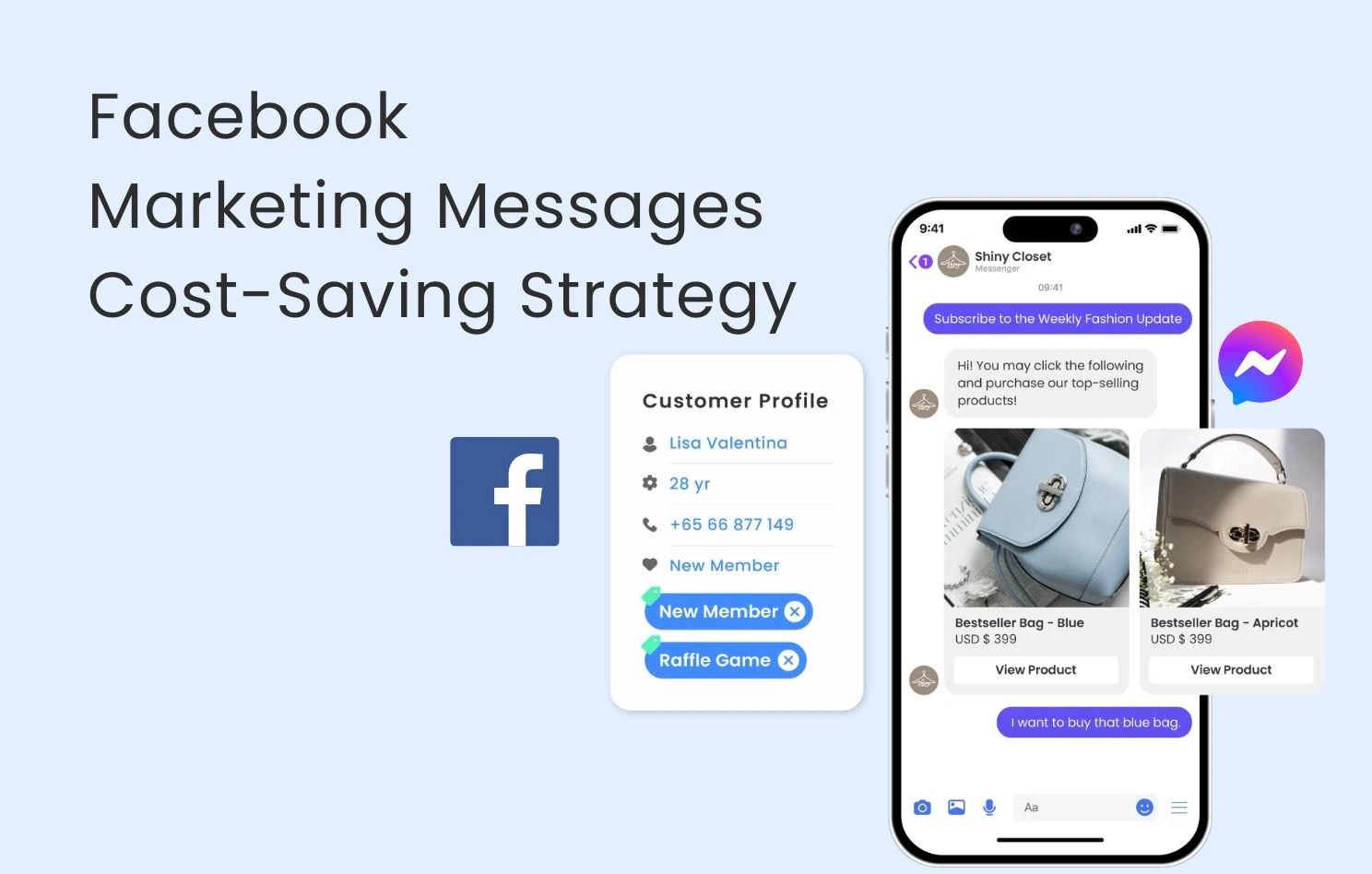
Meta has recently transitioned its original Facebook Recurring Notifications into the more commercially scalable Marketing Messages. Unlike the previous free model, Facebook Marketing Messages are now charged based on the volume of messages sent. This means brands must move away from mass broadcasting and instead use precision segmentation to plan content and target audiences. This ensures every cent of the budget is spent on customers with real conversion potential, thereby increasing engagement and conversion among high-value customers. This article explores the reasons behind this strategic shift and provides four practical tips.
💡Key Takeaways: Facebook Marketing Messages Cost-Saving Strategy
・Transition in Pricing Model: Brands must move from “mass broadcasting” to “precision segmentation” to control costs.
・Four Marketing Strategies:
・Broadcast Filtering: Set broadcast filter conditions and exclude unnecessary audiences.
・Automated Chatbot Tagging: Automatically record customer preferences and apply segmentation tags through conversations to achieve precise remarketing.
・Precision Tagging Strategy: Combine “Interest Tags” and “Behavioral Tags” to ensure content relevance and lock in the optimal timing for sending.
・Social CDP Integration: Integrate records from social platforms, online stores, and physical outlets to segment based on 360-degree data.
Why Use Segmentation Instead of Mass Broadcasting?
In the past, brands were accustomed to mass broadcasting to all followers regardless of their specific profile, attempting to win through sheer volume. However, under the current paid model and algorithms, this approach has profound negative impacts:
Mass Broadcasts Waste Budget
When sending messages costs money, messaging users who have zero purchase intent, or those who haven’t interacted in a long time, is essentially throwing a precious marketing budget into the ocean. Without filtering, the conversion rate of mass broadcasting is extremely low, causing customer acquisition costs to skyrocket and directly eroding profits.
Excessive Broadcasts Negatively Impact Brand Reach
Consumer tolerance for irrelevant messages is steadily declining. Excessive and irrelevant broadcasts are viewed as “spam,” leading customers to block brand accounts or report them. This not only results in long-term customer loss but also lowers the account’s authority on the platform, affecting future reach.
Mass broadcasts Lack a Personal Touch
Mass broadcast messages appear rigid and cold. Modern consumers desire “service that understands me,” and brands must meet customer expectations for personalised communication. Achieving “the right message for the right person” through precision data is the key to turning costs into profits.
FB Marketing Messages Cost-Saving Strategy 1: Utilise Broadcast Audience Filtering
To avoid annoying customers and to control costs, brands should flexibly use broadcast filtering functions to screen recipients. You don’t need to broadcast to 10,000 people to get 10 orders; by precisely filtering 1,000 highly relevant recipients, you can achieve the same or even better results, saving 90% in sending fees.
- Filtering Criteria Include: Subscription time, last interaction time, checkout completion time, and linked stores or staff.
- Precisely Exclude Unnecessary Audiences: When setting up broadcast groups, exclude customers who have “already purchased/checked out” from the current promotion list.

Example: An e-commerce platform holds a flash sale and sends a final reminder to customers who “collected a coupon but haven’t placed an order.” By using the filter function to exclude customers who “successfully checked out in the last 24 hours,” the brand saves on message fees and avoids bothering those who just made a purchase, maintaining a professional brand image.
FB Marketing Messages Cost-Saving Strategy 2: Use Chatbots for Automated Segmentation Tagging
Based on interaction with broadcast messages, businesses can use Chatbots to preset tags within the message flow. When a customer clicks a specific option, the system instantly and automatically records their preference and applies a segmentation tag without interrupting the user experience. This automated data collection allows for effective customer segmentation, helping brands tailor future remarketing efforts to individual tastes for precise delivery.
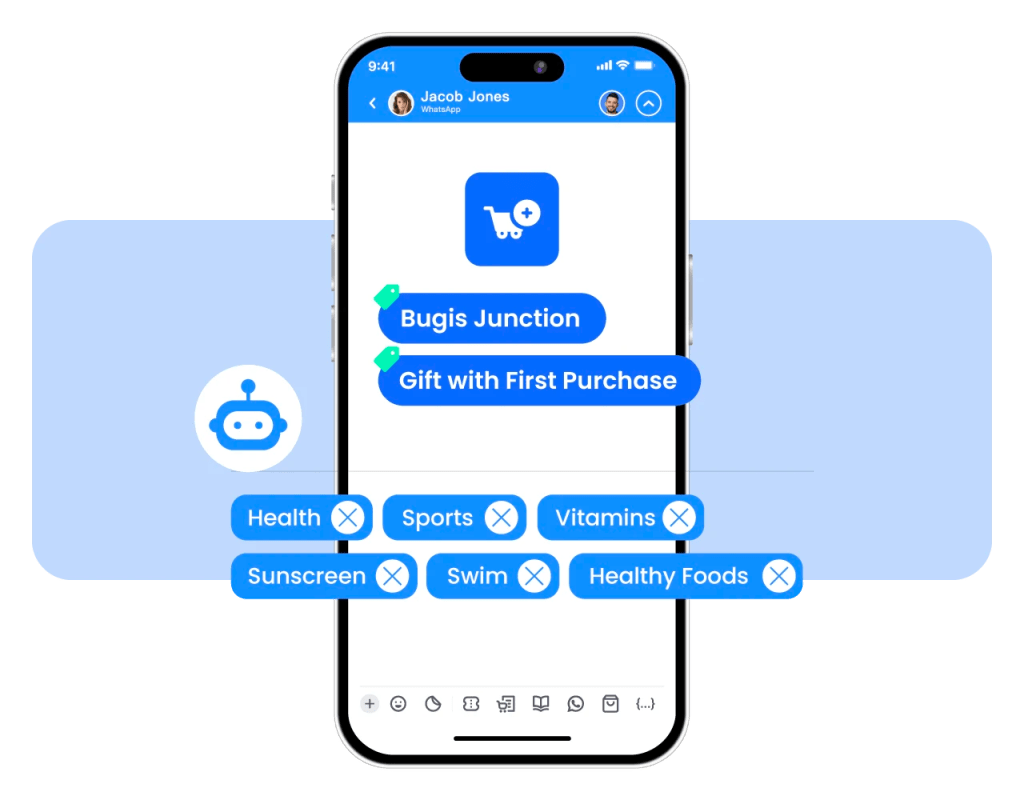
Example: An accessory shop sends a message about new spring products with buttons for “Ear studs” and “Clip-ons.” When a customer clicks “Clip-ons,” the system automatically marks their preference. For the next paid broadcast, the brand only needs to target customers with the “Clip-ons” tag, effectively saving costs by not sending to the wrong audience.
FB Marketing Messages Cost-Saving Strategy 3: Precision Tagging Strategy
What tags should be preset for precision segmentation? Tag classification should be strategic, and it is recommended to focus on two core types:
- Interest Tags: These record consumption preferences to ensure customers receive product information they are truly interested in. Higher relevance leads to higher click and conversion rates.
- Low Relevance: Broadcasting “site-wide women’s clothing offers” to all customers, including men or parents who have only ever bought children’s wear.
- High Relevance: Filtering for customers tagged with “Loves outdoor sports” and only broadcasting an “invitation to try new hiking boots” to them.
- Behavioral Tags: These focus on the precision of timing. Web Tracking can be used to track customer behavior on the official website to automatically trigger messages at the moment of highest purchase intent. The most classic scenario is when a customer has added a product to the shopping cart but has not completed the payment due to hesitation or distraction.
Example: A beauty brand tags customers as having “Dry Skin” or “Oily Skin” (Interest Tag) based on purchase records while simultaneously tracking which customers added items to their cart but didn’t finish the payment (Behavioral Tag). The brand then sends a Facebook message offering a “10% off limited-time discount on intensive hydrating serum” specifically to “Dry Skin” customers with “unpaid shopping carts,” precisely triggering a purchase impulse.
FB Marketing Messages Cost-Saving Strategy 4: Integrate Social CDP Data for Precision Segmentation Broadcast
Effective segmentation should not rely on a single tag but should use Social CDP data for multi-angle segmentation. A Social CDP can connect a company’s existing CRM, online store backend, and membership grading systems. It integrates interaction records from social platforms (including Facebook Messenger), the official website, and physical stores to create a consistent and actionable database. Data includes, but is not limited to:
- Customer Activity Level: Active customers who “interacted within the last 7 days,” dormant customers who haven’t made a purchase for a while, etc.
- Membership Level: Filter customers of different levels for different sales offers according to the membership system.
- Purchase Amount: High or low single transaction value, accumulated consumption amount, etc.
- Other Data: Whether they are linked as a website member, if there are unpaid items in the shopping cart, etc.
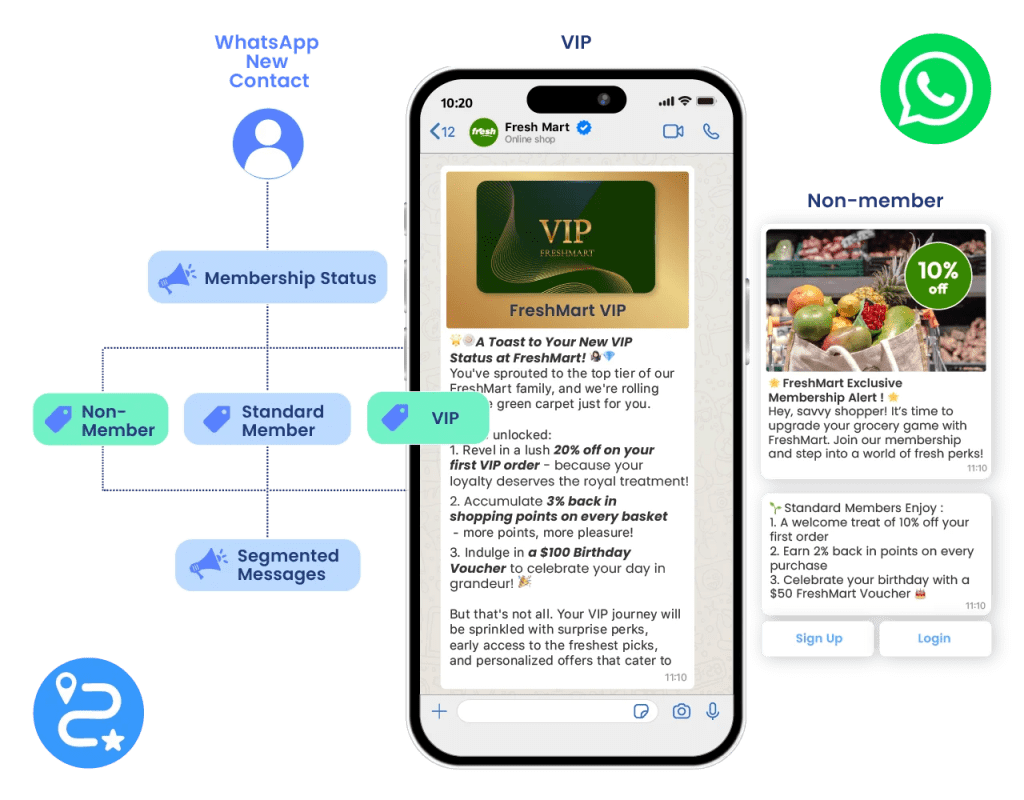
Example: A car dealership uses Social CDP data to filter customers who “browsed the electric vehicle webpage in the last 3 days,” are “VIP members,” and “last had a service over six months ago.” Precisely sending an “invitation for a test drive of the latest EV model” to this specific audience results in a much higher conversion rate than mass broadcasting.
Summary: Turning Cost Pressure into a Competitive Advantage
Under the pay-per-message model of Facebook Marketing Messages, although operational expenses have increased, brands can become more effective by mastering precision segmentation. Sending one message to a “hot” customer is far more effective than broadcasting 100 messages to a “cold” audience. Brands no longer have to waste their budget; instead, they can precisely invest in every customer relationship.
Book a Consultation