

In the world of digital marketing, Chatbots are no longer just tools for answering simple FAQs. If you want to break through your sales bottlenecks, you need to think outside the “Chatbot = Customer Service” box and transform it into your automated salesperson. Below, we analyse how Chatbots help you outperform competitors across three areas: omnichannel management, precision remarketing, and operational efficiency.
Key Takeaways: Chatbot Marketing for Ecommerce
・Omnichannel Integration: Combined with an omnichannel system to manage WhatsApp, FB, and IG chats in one platform. Chatbots recognise customer identities to eliminate repetitive questions.
・Precision Remarketing: Automatically tag customers through conversations for targeted broadcasts and detect unpaid carts to send automated recovery reminders.
・Operational Efficiency: Let Chatbots handle FAQs like logistics tracking, freeing up staff to focus on high-value decisions and maintaining brand standards.
Strategy 1: Omnichannel Integration for Unified Customer Records
Inquiries for many online stores are scattered across Facebook, WhatsApp, Instagram, and website Live Chat. Customers often have multiple social accounts and may ask a question on Facebook, then follow up on WhatsApp.
1. Eliminate Repetitive Q&A with Omnichannel Systems
When a Chatbot is integrated with an omnichannel customer support messaging solution, all messages are consolidated into a single conversation view. The Chatbot operates across platforms in one backend and automatically identifies the same customer.
- Example: A customer asks about product details on FB and follows up on WhatsApp in the afternoon. Since the records are merged, the Chatbot immediately knows the previous context and provides a seamless follow-up without the customer needing to repeat themselves.
2. 24/7 Response to Capture Every Sales Opportunity
Online shoppers demand speed. Chatbots operate 24/7, providing instant answers to repetitive queries like “Is this in stock?” or “When will it ship?” When a customer inquires late at night, the Chatbot provides immediate answers, preventing them from turning to a competitor due to the wait.
- Example: A customer wants to buy a dress at 2 AM and asks for a size chart. The Chatbot instantly sends the chart, and the customer completes the purchase immediately without waiting for the owner to start work the next day.
Strategy 2: Precision Remarketing to Become Your Best Salesperson
Chatbots don’t just answer questions; they proactively recover lost business and boost conversion rates.
1. Automated Abandoned Cart Recovery
“Abandoned carts” are a major headache for e-commerce. Chatbots can automatically detect incomplete orders and send friendly reminders via WhatsApp or Messenger, sometimes offering a small, limited-time discount to nudge the customer to complete the purchase.
- Example: A customer adds sneakers to their cart but forgets to pay. An hour later, they receive a WhatsApp message: “The sneakers in your cart are low in stock. Order now for 5% off!” The customer clicks the link and checks out instantly.
2. Automated Tagging for Targeted Broadcasts
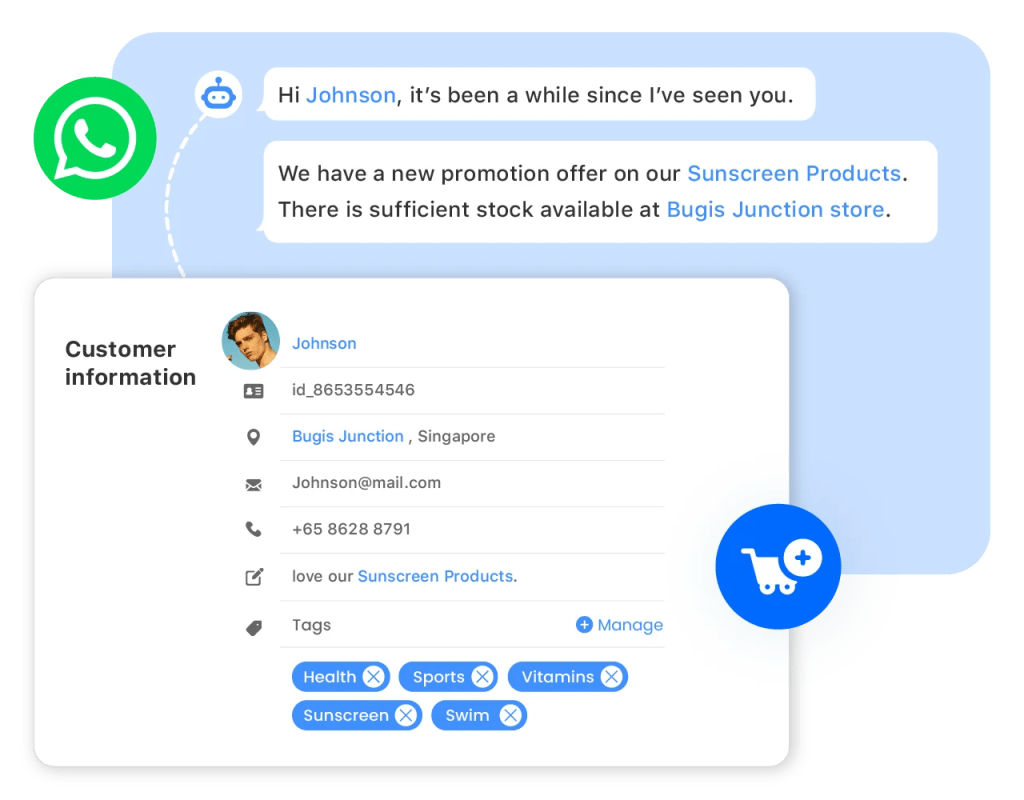
Through dialogue, Chatbots can automatically tag customers (e.g., “Loves Minimalist Style” or “Interested in Skincare”). When you launch related products, you can send targeted broadcasts specifically to those tagged segments.
- Example: If a store restocks a new collection of sunscreen products, you can send a broadcast only to those tagged as “Sunscreen” or “Sports” rather than spamming your entire database. This leads to higher conversion and less annoyance for other customers.
Strategy 3: Streamlining Operations to Free Up Human Resources
Chatbots handle high volumes of repetitive tasks, allowing online stores to scale without a proportional increase in headcount.
1. Handling “Busy Work” to Boost Efficiency
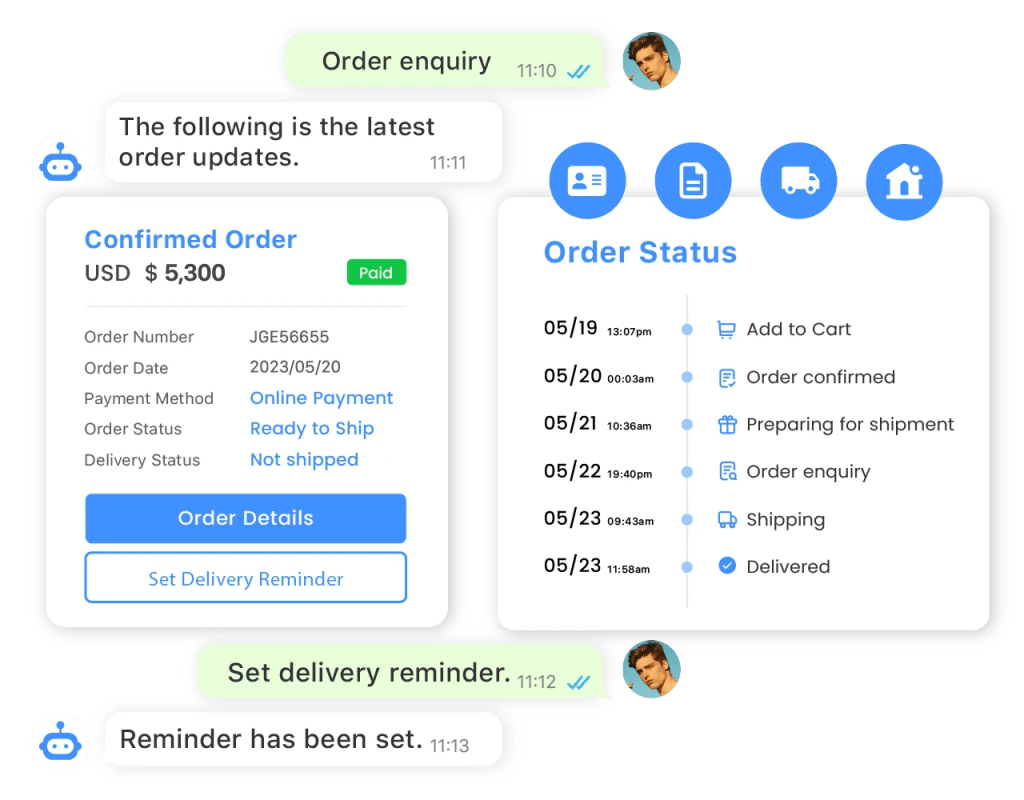
Chatbots can automate price inquiries, send tracking links, and even handle simple payment reminders. This frees owners and staff from tedious administrative tasks, allowing them to focus on product development or marketing strategies.
- Example: Instead of staff manually replying to 50 “Where is my parcel?” messages a day, the Chatbot syncs with the logistics system so customers get instant updates by entering their order number.
2. Standardised Service to Build Brand Trust
Human responses can vary due to stress, fatigue, or mood. Chatbots provide consistent and accurate answers, ensuring the quality of service remains high across all channels and at all times, building a professional brand image.
- Example: Whether it’s during a major Black Friday sale or a quiet weekday, the Chatbot provides the exact same return policy information, avoiding human errors or disputes.
Conclusion: Thinking Outside the Box for Competitive Advantage
Chatbots do more than just save on labour costs; they are essential drivers for increasing revenue. By applying Chatbots to omnichannel integration, precision remarketing, and workflow simplification, they become your most valuable marketing asset.
Book a Consultation