Have you ever received a one-time password (OTP) via SMS for account login, transaction approval, or identity verification? An OTP is a unique, time-sensitive password used to confirm a user’s identity. With the growing adoption of WhatsApp, WhatsApp OTP has become a secure and convenient alternative for user authentication, widely used for registration, login, and payment verification. Compared with traditional SMS OTP or email delivery, WhatsApp OTP verification provides stronger security, faster code delivery, and higher reliability. As more businesses move from SMS to WhatsApp for authentication, notifications, and marketing, this shift enhances both customer trust and the overall verification experience.
What is WhatsApp OTP?
An OTP, or one-time password, is a unique code that typically consists of numbers or alphanumeric characters. OTP authentication is a secure method used to verify a user’s identity during different actions such as account registration, identity verification, or transaction approval. Because an OTP is valid only for a short period, it serves as an additional step in two-factor authentication (2FA) to strengthen account security.
During the login process, after entering a username and password, the user must enter the OTP as a second layer of verification. This ensures that only authorised users can access their accounts. To complete the process, the user must provide a valid phone number to receive the OTP. With WhatsApp OTP, the verification code is delivered directly through WhatsApp instead of SMS, providing a faster and more reliable way for users to complete authentication securely.
Why Choose WhatsApp OTP over SMS OTP?
Having relied on SMS for OTP delivery, numerous companies have come to recognise the limitations it presents:
- Lack of End-to-end Encryption
SMS messages are not end-to-end encrypted, which means sensitive data such as verification codes could be intercepted or exposed during transmission. This weakness goes against the core purpose of using OTP for secure authentication. - Absence of Business Verification
SMS messages can be sent from random phone numbers, and even when a display name is used, customers have no reliable way to confirm whether the message is from a verified business. In contrast, WhatsApp OTP messages are sent through verified business accounts, which display a business name, logo, and verification badge to build user trust. - Suboptimal Customer Experience
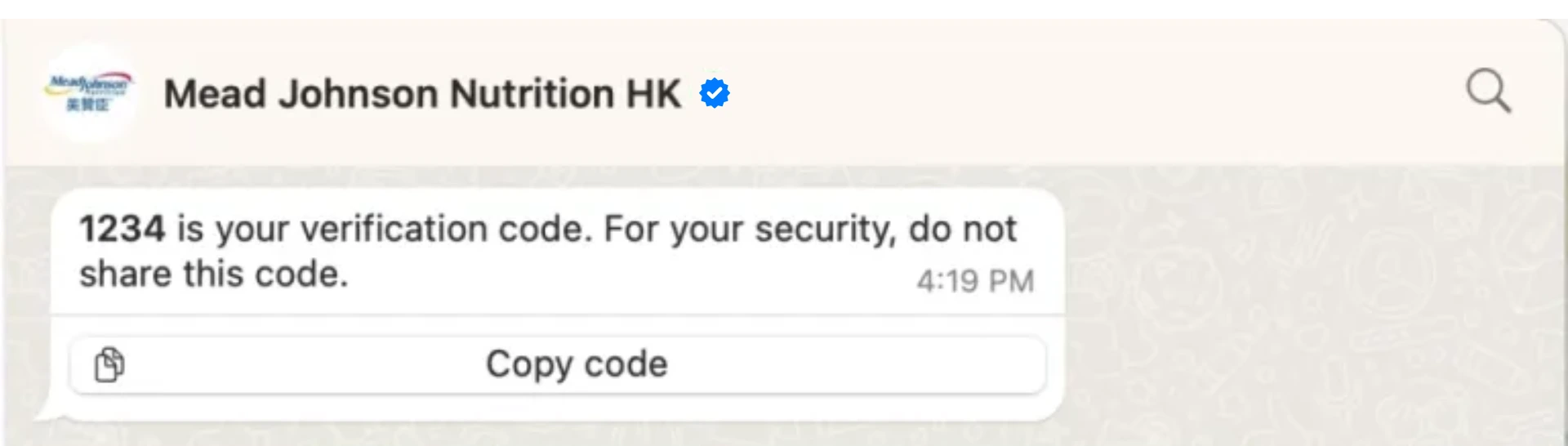
SMS supports only plain text without interactive features. While businesses can include a contact number in the message, most customers find it inconvenient to respond through traditional SMS. WhatsApp OTP verification, on the other hand, allows interactive buttons and instant replies within the same chat, improving engagement and user convenience.
- Higher Delivery Costs
Sending OTP via SMS is less cost-effective than WhatsApp OTP after Meta announced a new pricing rule for WhatsApp authentication conversations. Sending OTP via WhatsApp is more efficient, and using WhatsApp for OTP delivery offers both cost and security benefits.
Benefits of WhatsApp OTP Verification for Businesses
- Enhanced Security
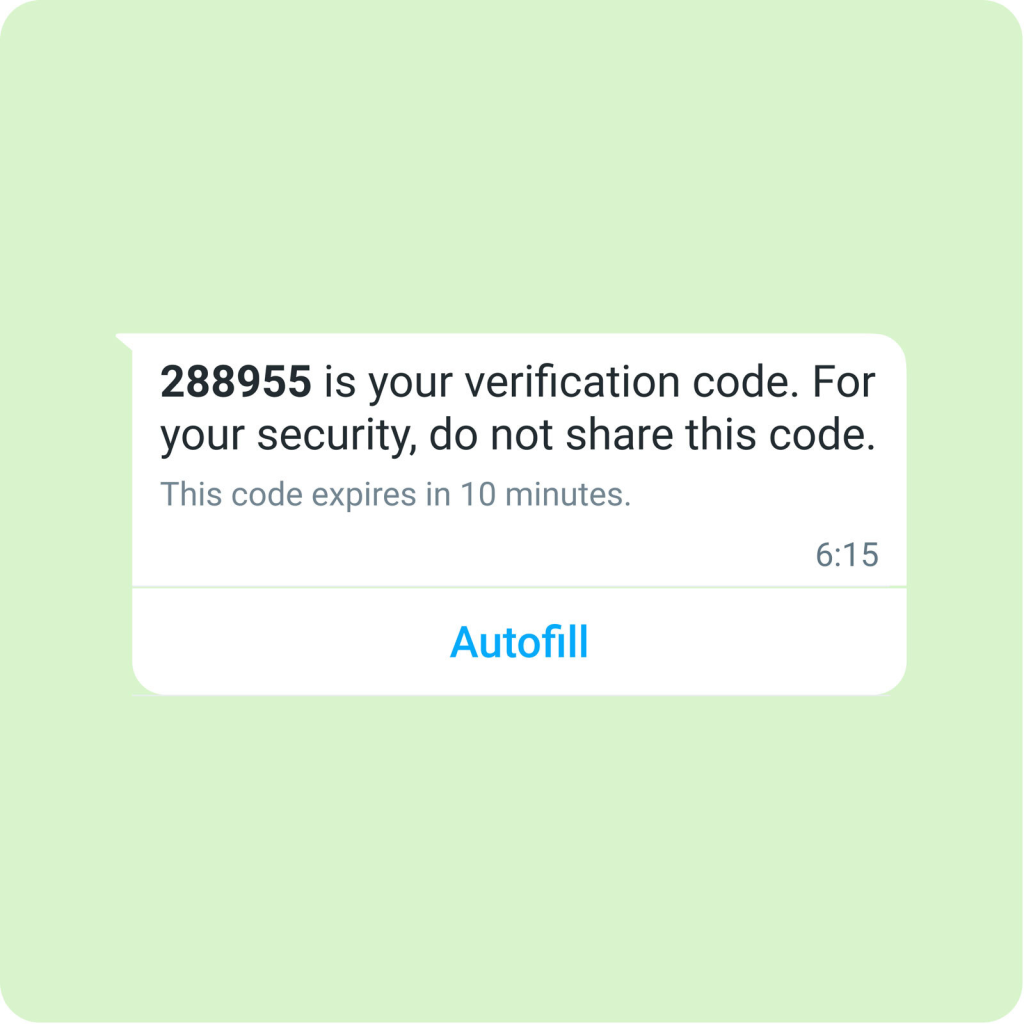
All WhatsApp messages (including OTP) are encrypted end-to-end. This ensures that third parties cannot retrieve verification codes, effectively preventing any form of data leakage and safeguarding customer information. WhatsApp OTP verification messages further ensure the security and privacy of user data, enhancing overall protection.
- Increased Brand Trust
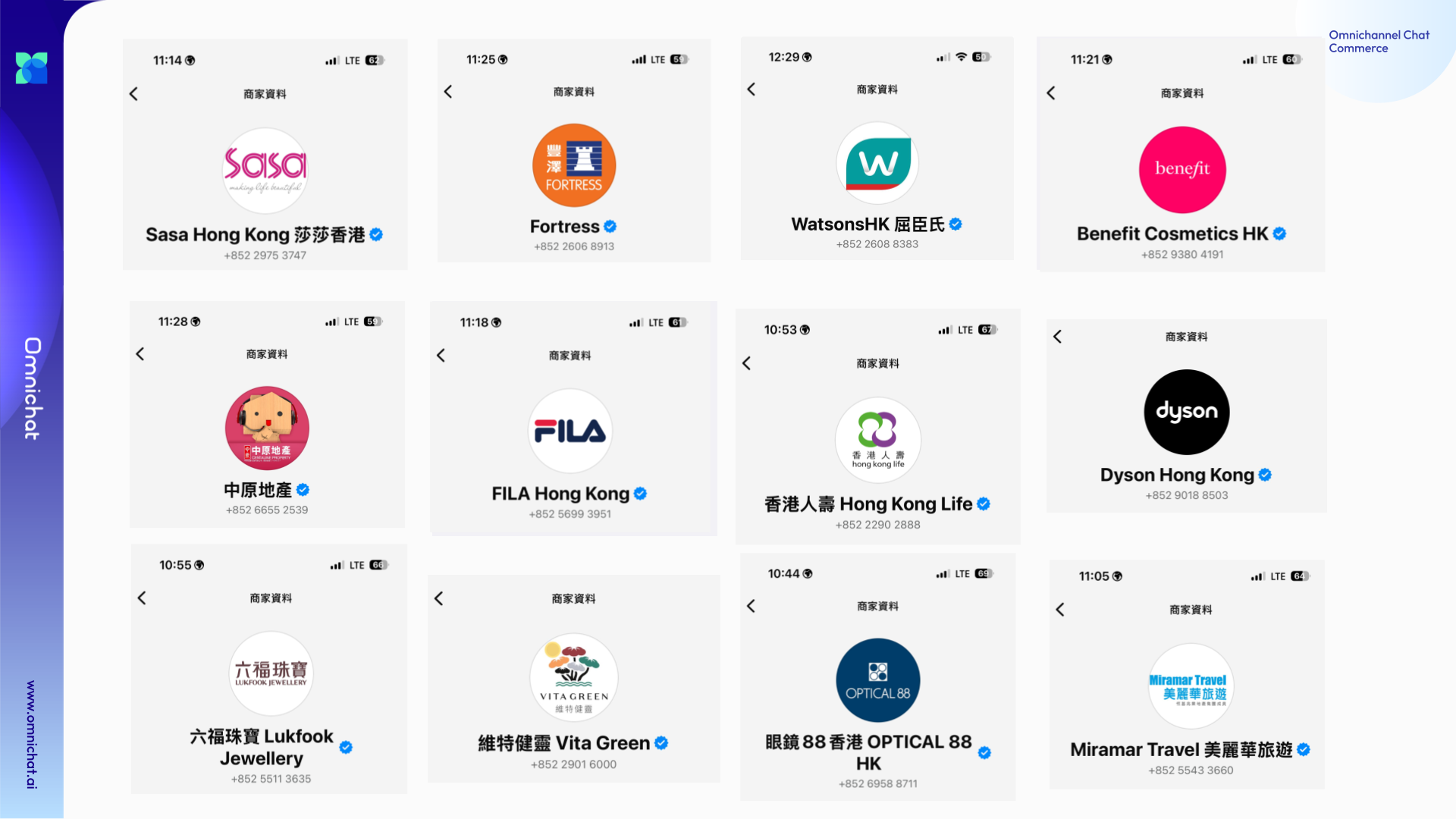
The WhatsApp Business Platform offers “Blue Tick verification” for businesses, enabling customers to see the business logo and display name with a verified Blue Tick in WhatsApp conversations, instilling a greater sense of trust.
- Secure Password Resets
Using WhatsApp OTP for password resets ensures that only verified users can reset their accounts, reducing the risk of unauthorized access or account misuse. - Better Customer Experience
WhatsApp OTPs offer customers a more convenient means of communicating with businesses and seeking assistance when encountering authentication issues. Mead Johnson Nutrition has seamlessly integrated with Omnichat’s WhatsApp Business Platform for OTP delivery. Customers can effortlessly copy the temporary code by clicking a button, enhancing the overall customer experience.
With strengthened security, WhatsApp OTPs provides a more trustworthy and seamless experience for both businesses and customers. Embrace this powerful tool and unlock a new level of convenience and security for your business today!
Use Cases: Real-World Applications of WhatsApp OTP
WhatsApp OTP has a wide range of application scenarios, catering to the diverse needs of different industries and businesses. Here are some common real-world use cases:
- User Registration and Login
During new account registration or login, businesses can send a one-time password (OTP) via WhatsApp for identity verification. This approach enhances security and ensures that only legitimate users can access their accounts, effectively preventing unauthorized access. - Transaction Verification
For high-security scenarios such as financial services or e-commerce platforms, WhatsApp OTP verification can function as part of two-factor authentication (2FA). It helps users verify their identity when making payments, transfers, or other sensitive operations, reducing the risk of fraud. - Account Recovery
When users forget their passwords or need to reset their accounts, businesses can quickly confirm user identity by sending OTP verification codes through WhatsApp, preventing unauthorized account tampering or theft. - Subscription Services
Subscription-based businesses, including software companies and content platforms, can simplify the subscription or renewal process with WhatsApp OTP SMS. Users can verify their identity within WhatsApp, creating a smoother and more secure user experience. - Appointment Confirmation
Service-based industries such as medical clinics, salons, and education centers can use WhatsApp OTP for appointment confirmations. After receiving the OTP, users confirm their bookings directly through WhatsApp, helping reduce no-shows and improving operational efficiency.
Through these practical applications, WhatsApp OTP not only enhances the security of identity verification but also improves customer experience and operational reliability, enabling businesses to build stronger trust and efficiency.
Implementing WhatsApp OTP in Your Business
Implementing WhatsApp OTP securely in your business involves several key steps to ensure both security and a smooth user experience:
- Register a WhatsApp Business Account
Start by creating a verified WhatsApp Business account. This account serves as the official channel for sending OTPs and other business messages. A verified account with a Green Tick badge enhances customer trust and reinforces your brand credibility. - Create and Get Approval for Message Templates
WhatsApp requires businesses to submit message templates in advance for OTP delivery. These templates usually contain the OTP verification code and clear instructions for the user. All templates must comply with WhatsApp’s Business Policy and receive approval before use to maintain high delivery success and avoid blocking. - Set Up an OTP Sending System
Businesses can either build their own OTP-sending system or integrate with third-party providers such as Omnichat. The system should support automated, real-time delivery of OTP messages, handle large volumes efficiently, and ensure prompt, reliable message transmission. - Integrate WhatsApp OTP into Your Business Processes
Incorporate WhatsApp OTP verification into key user workflows like account registration, login, transaction confirmation, password resets, and other sensitive actions. This integration adds a secure second factor of authentication (2FA) while providing a seamless experience for users. - Test and Optimise the OTP Process
Before rollout, conduct comprehensive testing to confirm that OTP messages are delivered promptly, verification codes function properly, and the overall flow is user-friendly. Gather user feedback and track performance metrics to continuously improve reliability and security. - Ensure Data Privacy and Security Compliance
Handle all user data in line with applicable privacy regulations. Although WhatsApp messages are end-to-end encrypted, businesses should still protect backend systems, secure databases, and restrict access to verification logs.
By following these steps, businesses can use the WhatsApp Business API to send OTP verification codes securely and efficiently. This approach enhances security and customer trust while reducing operational costs compared with SMS OTP, and delivers a smooth, reliable verification experience that protects both users and business operations.
Book a Consultation