Rising ad costs are no longer news, and consumer attention is deeply fragmented across scattered traffic. As a marketer, do you feel trapped in the dilemma where “all marketing ROI is declining, yet every channel still demands effort,” creating profound “traffic anxiety”? In 2026, the traditional marketing funnel—relying on heavy ad spend to drive traffic to websites and capture leads—continues to yield diminishing returns. While the rise of AI and Threads offers fresh traffic opportunities, will they become just another passing trend? The key lies in how effectively brand owners leverage AI tools and new social platforms to build private domain channels, nurture highly engaged audiences, and maximise Customer Lifetime Value (LTV).
How can brands retain hard-won traffic and convert it into real revenue under tight budgets? DataReportal’s Digital 2026 Global Overview Report provides a clear answer: the next marketing breakthrough lies in shifting from blind traffic acquisition to lead retention and AI-driven private domain automation.
Key Takeaways
・Market Shift: Facing low web click-through rates, 2026 strategies prioritise lead retention and private domain engagement.
・Omnichat Capability: Agentic AI enables marketers to build automated conversational workflows in seconds using natural language.
・Business Impact: Breaking data silos to build first-party data increases conversion rates by 3x–5x compared to static websites.
2026 Key Data Insights: 1 Billion Monthly AI Users & the Shift to Private Domain Engagement
According to the latest Digital 2026 report, monthly active users relying on generative AI for search or problem-solving have officially surpassed 1 billion, with ChatGPT holding an 80% market share among top Large Language Model (LLM) users. This data signals a fundamental shift in consumer decision-making and search behavior.
Rapid Growth in Social Media Users
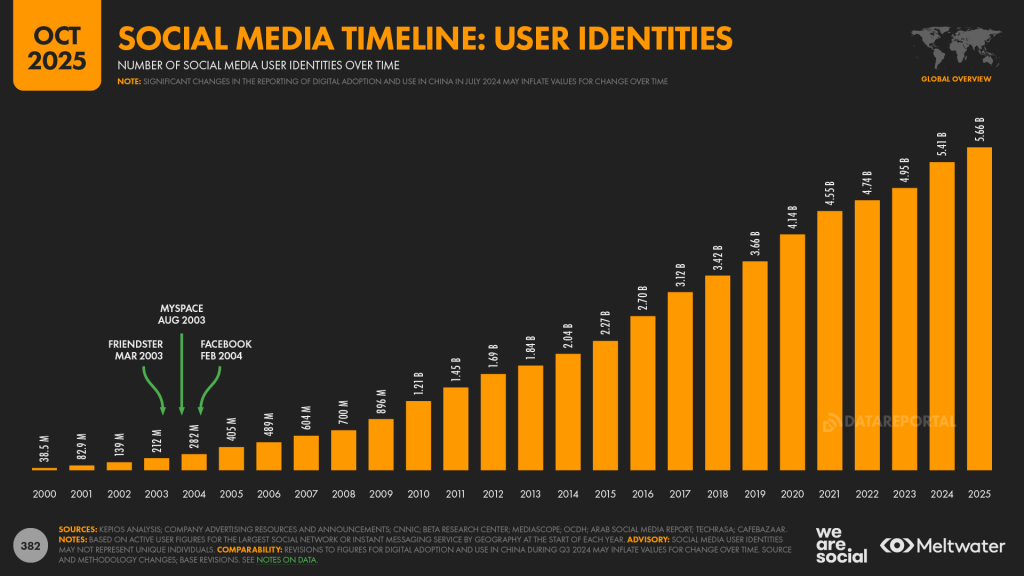
As global internet penetration rises, social media usage has hit an all-time high. Kepios’s latest analysis reveals 5.66 billion active social media user identities worldwide—equivalent to 68.7% of the global population. Nearly 7 out of 10 people globally are active social media users.
Over the past year, social media users grew by 259 million (a 4.8% YoY increase), proving that social platforms are no longer just for younger demographics, but form the core of digital life across all age groups.
Source:Digital 2026 Global
Changing Search Habits: Traditional Search Declines as Social Engagement Grows
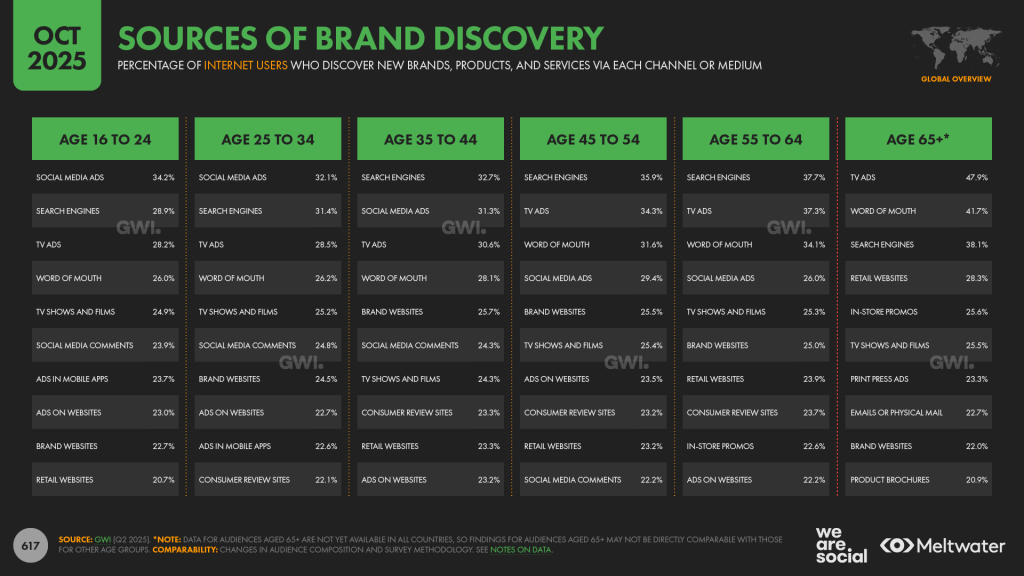
Consumer search habits are quietly evolving. The percentage of online adults using traditional search engines (like Google) dropped to 80.3% in the past month—a recent low. For ages 16–34, social media functions directly as a search engine where they discover information and make purchasing decisions.
Source:Digital 2026 Global
Instead of clicking external ad links, consumers increasingly rely on AI recommendations or seek instant answers within their preferred social ecosystems (e.g., WhatsApp, Instagram, Facebook). Although over 50.4% of internet users research brands on social platforms before buying, social algorithm restrictions have driven overall website Click-Through Rates (CTR) to historic lows.
The takeaway for brands: If you fail to capture a customer’s intent the moment they land on your social channel or website, they leave immediately. Driving traffic to static landing pages now faces higher friction; future sales will happen directly within everyday social conversations.
Harnessing AI Tools to Build High-Converting Workflows
In the 2026 digital landscape, breaking revenue bottlenecks isn’t just about “using AI”—it’s about leveraging deeply integrated AI tools to build revenue-generating workflows efficiently.
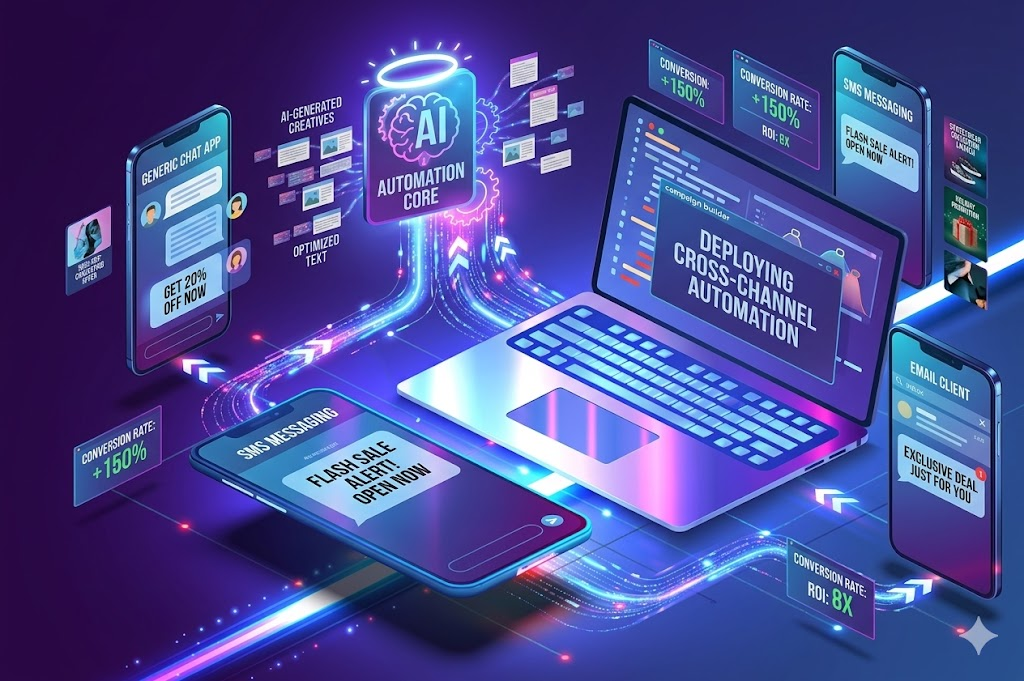
Traditional marketing required days of cross-platform copywriting, manual chat flow setup, and graphic design, missing market momentum by launch time. Today, brands can utilise autonomous AI tools that connect strategy, visuals, and workflows. Through precise prompting, marketers can rapidly deploy cross-channel automated sales flows, delivering high-converting broadcast messages at the exact moment of peak buying intent—converting social traffic into orders with minimal manual effort.
Turning Traffic into Retention: How Private Domain Marketing & Conversational Commerce Build First-Party Data
To combat declining ad effectiveness, 2026 marketing focuses on private domain retention. Public traffic drives initial awareness, but private domain retention powers conversion and repeat revenue.
Conversational Commerce serves as the core framework for private domain success, delivering two major operational advantages:
1. Real-Time Engagement for the Golden 3-Second Retention Window
Static e-commerce pages suffer from high bounce rates when visitors leave after a quick glance. With Conversational Commerce, as soon as a visitor lands on a website, Facebook Page, or WhatsApp Business account, automated systems trigger personalised messages within 3 seconds based on browsing behavior. Replicating an in-store assistant, this approach boosts conversion rates by 3x–5x compared to static pages, according to Omnichat benchmark data.
2. Cross-Channel Tracking & Unified First-Party Data Tagging
Every interaction and button click provides valuable customer tags. Brands must adopt a unified cross-channel strategy, breaking down data silos across WhatsApp, FB, and IG. Whether a customer sends a DM on Instagram or checks an order on WhatsApp, brands can identify “who they are, what they like, and what they need” via a single One ID profile within a central backend. This builds a robust First-Party Database, mitigating risks from algorithm shifts.
Inflation-Proof Strategy: WhatsApp Progressive Broadcasts × FB Marketing Messages
Marketers often face a major dilemma: “On WhatsApp, without knowing user identities or preferences, we can’t segment effectively. Sending untargeted bulk broadcasts drives up messaging costs without improving ROI.”
In 2026, the full launch of Facebook Marketing Messages (FBMM) offers a dual-channel strategy balancing reach and cost efficiency:
WhatsApp Business API: High-Intent Zone for Member Loyalty & Conversions
With over 90% penetration in key Asian markets like Hong Kong, WhatsApp is embedded in daily life. However, untargeted broadcasts on WhatsApp API quickly become cost-prohibitive.
Brands should adopt Progressive Broadcasts, leveraging behavioral tagging—such as browsing history, abandoned carts, recent purchases, or loyalty tiers—to target users close to converting, maximising return on ad spend (ROAS).
Facebook Marketing Messages: Broad Reach & Low-Cost Re-Engagement
Meta’s FB Marketing Messages bypass the traditional 24-hour customer service window. When users opt in (via post comment triggers or chat prompts) or match via CRM email/phone uploads, brands can send promotional broadcasts within flexible 12-hour windows. With lower per-message costs, FBMM is ideal for new product drops, seasonal campaigns, and mass re-engagement.
Dual-Channel Strategy Comparison
| Feature | WhatsApp Progressive Broadcasts | Facebook Marketing Messages |
| Core Role | Deep member loyalty, high-AOV conversions | Broad product exposure, low-cost traffic, win-backs |
| Audience | Opted-in WhatsApp users with behavioral tags | Opted-in (Opt-in) or CRM-matched audiences |
| Budget Strategy | Bottom-funnel targeting, strict ROAS control | Upper/Mid-funnel messaging, lowering overall ad costs |
By shifting broad promotions to FB Marketing Messages while reserving high-value VIP engagement for WhatsApp, brands maintain high reach while lowering re-marketing costs.
Winning in 2026: Omnichat Leads the Agentic AI Era
Implementing dual-channel strategies often stretches lean teams thin. The core AI trend for 2026 is moving beyond basic copywriting prompts to Agentic AI—systems capable of autonomously planning, executing, and optimising end-to-end workflows.
As an official Meta Global Partner, Omnichat has evolved into an AI-Native Autonomous Agent CX Platform, replacing rigid, manual rule trees with an AI digital workforce:
1. Omni AI Message Flow: Natural Language to Automated Workflows
Setting up abandoned cart recovery used to take hours of manual logic mapping. With Omni AI’s Message Flow, marketers simply input a natural language prompt:
“Design a promotional workflow for the upcoming holiday campaign targeting WhatsApp users with abandoned carts. If they don’t purchase within 24 hours, send a follow-up discount code via Facebook Marketing Messages.”
The Agentic AI engine processes the goal, writes channel-specific copy, and deploys multi-step logic in seconds, leaving marketers to review and approve.
2. Built-in AI Studio: Integrated Strategy & Visual Generation
Instead of switching between AI writers and external design software, Omnichat’s built-in AI Studio integrates directly into chat workflows. Marketers can generate and edit images tailored for WhatsApp cards or FB message formats right within the platform, speeding up execution by 5x.
From “Traffic” to “Retention”: Reclaiming Digital Marketing Sovereignty with AI
The Digital 2026 trend report highlights a vital reality: in an era of tightening algorithms, marketers need not panic, but rather recognise that in a “zero-click era” where public traffic is drying up, a brand’s success depends on how effectively you manage your private domain and systematically integrate AI workforces.
By flexibly deploying a dual-track private domain strategy leveraging WhatsApp Progressive Broadcasts and Facebook Marketing Messages, while delegating tedious flow builds and visual creation to Omnichat’s upgraded Omni AI workforce, brands can break free from algorithm dependency and achieve extraordinary omnichannel conversion results at the lowest possible cost!
Book a Consultation