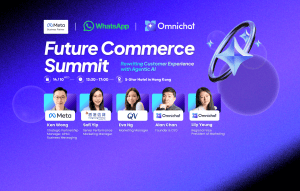
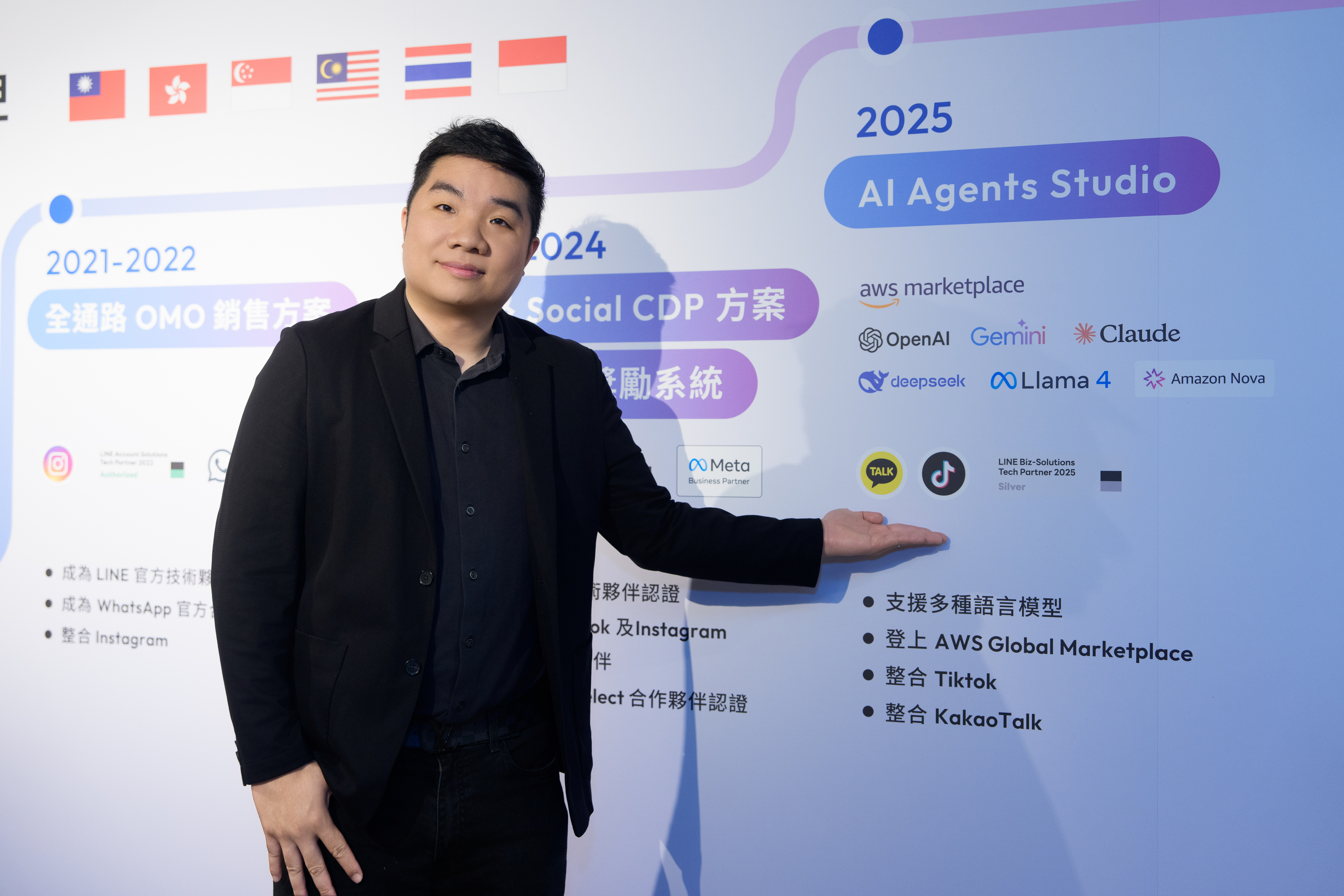
We would like to extend our gratitude to Brain Magazine (a famous marketing publication in Taiwan) for inviting Alan Chan, Founder and CEO of Omnichat, to share his insights on the evolution of AI in their latest feature.
Over the past decade, the retail industry has revolved around the concept of “Conversational Commerce.” However, it wasn’t until the rise of Generative AI in 2023 that we truly witnessed a turning point in this transformation. Now in 2026, we are experiencing an even greater paradigm shift: moving from “chatbots that can talk” to “AI agents that can take action.” This is not just a technological upgrade—it is becoming a new growth engine for businesses across industries to address labor shortages and improve revenue efficiency.
From Chatbot to AI Agent: The Power of “Actionability”
Reflecting on the past, most brand chatbots were built on keyword-based rules. They struggled to understand complex semantics and could only push rigid FAQ links. These bots were essentially “automated answering machines” that failed to resolve core consumer issues.
The new generation of Agentic AI is different. It possesses a “brain” powered by Large Language Models (LLMs) that understands context and consumer sentiment. More importantly, it has “hands and feet.” By integrating with internal CRM, inventory, and POS systems, the AI no longer simply tells a customer to “check the website.” Instead, it takes direct action within LINE or WhatsApp: “Hi Alan, your package has arrived at the store. Here is your pickup code.” This seamless transition from “conversation” to “action” is the heart of the reshaped customer journey.
Within the Omnichat framework, we categorise this capability into four key scenarios: Customer Service, Marketing, Shopping, and Loyalty Management. These four “Digital Employees” operate independently yet collaboratively to weave a frictionless service web.
1. Customer Service Agent: Transforming Cost Centres into “Service-as-Sales”
Customer service is often viewed as a cost centre, but empowered by AI Agents, it becomes the front line of sales. Traditional teams dread peak seasons and repetitive administrative queries. Our AI Service Agents use Retrieval-Augmented Generation (RAG) to precisely reference a brand’s knowledge base, effectively eliminating “AI hallucinations” and ensuring accuracy.

According to our experience supporting multiple international brands, AI Agents successfully resolve over 70% of repetitive inquiries. The true differentiator, however, is “Sentiment Awareness” and “Human-AI Collaboration.” When the AI detects angry keywords, it recognises the need for empathy and immediately transfers the chat to a human agent. This division of labour—AI for efficiency, humans for empathy—frees staff from mundane tasks to focus on complex complaints or VIP care, turning satisfaction into repeat purchase rates.
2. Marketing Agent: From “Executors” to “Strategists”
Marketers should be strategic commanders, not just message operators. The new AI Marketing Agent can assist in “planning campaigns from zero to one.” Now, a marketer simply inputs a core objective: “Clear winter inventory two weeks before Valentine’s Day with a target ROAS of 5.” The AI Agent then acts as a co-pilot, automatically generating a full automation workflow:
- Automated Audience Segmentation: Analysing data to lock in high-potential segments.
- Strategic Content Generation: Automatically producing differentiated visuals, copy, and scripts.
- Self-Optimising Performance: Real-time monitoring that automatically redirects traffic to high-performing copy, achieving “Marketing Autopilot.”
3. Shopping Agent: The Super Salesperson in the Chatbox
An AI Shopping Agent acts as a top-tier digital concierge. When a customer expresses a specific need, the AI recommends products in real-time and guides them through checkout. It also serves as a bridge for OMO (Online-Merge-Offline); the AI can confirm a lead’s requirements online and then direct them to a store for a trial, attributing the final sale to the specific shop staff. This incentive-sharing mechanism makes AI a teammate to retail staff, rather than a competitor.
4. Customer Loyalty Agent: Re-engaging Dormant Members
With customer acquisition costs skyrocketing, retention is paramount. AI can automatically execute “re-engagement missions,” such as sending birthday gifts or checking in on members who haven’t purchased in a while. Through points balance inquiries and gamified interactions, the AI makes loyalty management a consistent “daily habit,” maintaining a stable customer base without heavy ad spend.
Conclusion: Embracing the New Era of Human-AI Collaboration
The rise of AI is not meant to replace humans, but to empower them. Future competition in retail will be decided by who can most effectively utilise “Digital Employees.” When AI Agents handle 80% of standardised tasks, a company’s most valuable asset—its people—can be released to focus on the 20% that requires empathy, creativity, and complex decision-making.
The journey from “conversation” to “action” has only just begun. In markets with high digital penetration, brands that lead the charge in integrating AI into their daily operations will seise the advantage on this golden growth curve, building a truly consumer-centric business model for the future.
Book a Consultation