The golden rule of conversational marketing is simple: send the right message, at the right time, to the right person. In practice, this is harder than it sounds. When businesses broadcast messages on WhatsApp or other channels, the challenge is not the sending itself, but knowing what message to send and when it will actually resonate with each customer. This is where customer journey automation becomes essential. By connecting data across messaging platforms, websites, ecommerce systems, and CRM tools, businesses can design automated customer journeys that respond to real customer behaviour instead of relying on one-size-fits-all campaigns.
Through an omnichannel customer journey, brands can understand who their customers are, what they are interested in, and where they are in the buying cycle. Data such as WhatsApp contact identities, website membership details, browsing behaviour, and purchase history helps identify which messages are relevant, which customers are ready to convert, and which interactions help build long-term loyalty.
When used correctly, customer journey marketing automation does more than improve short-term conversions. It strengthens customer relationships by delivering timely, personalised experiences across multiple channels, including WhatsApp, websites, and CRM systems.
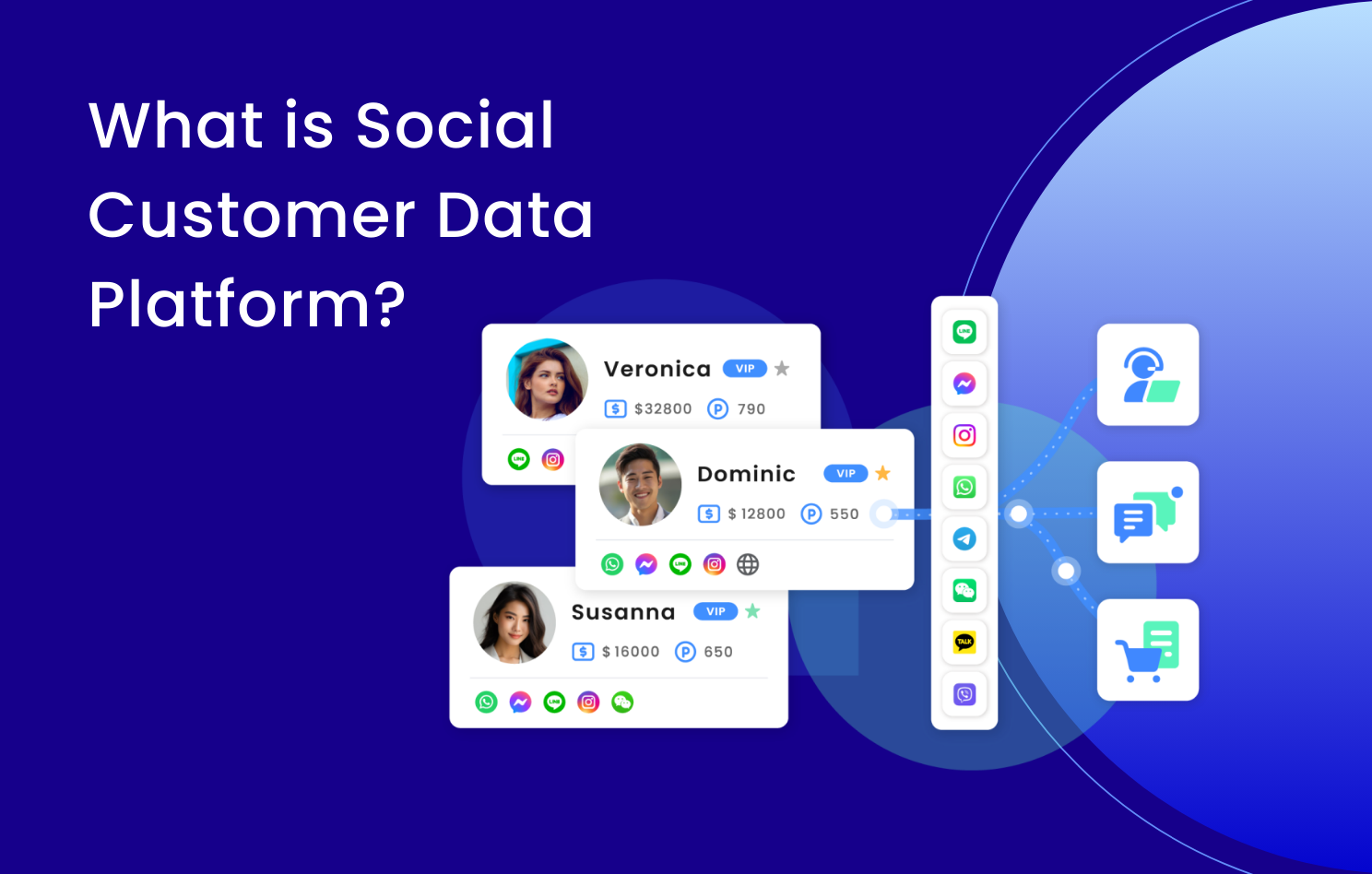
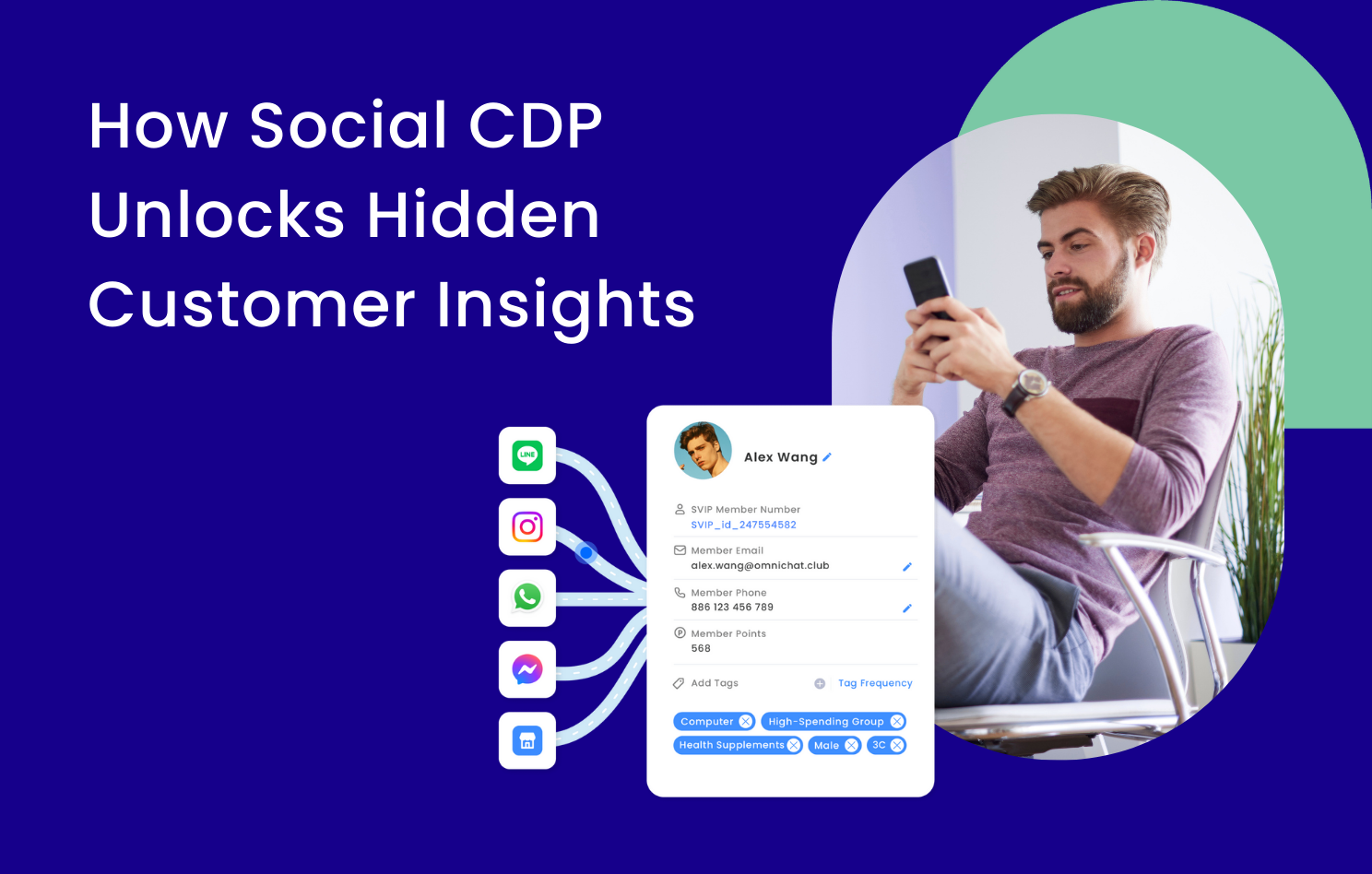
With Omnichat’s Social CDP and Automated Customer Journey capabilities, businesses can consolidate customer data from multiple sources into a single view. This makes it easier to activate personalised messaging, align online and offline touchpoints, and execute scalable omnichannel customer journeys that support both marketing and sales goals.
We previously introduced the concept of Social CDP in detail in Social CDP: Harnessing Multi-channel Customer Data for Sustainable Revenue Growth via Personalised Marketing. In this article, we focus on the practical side of customer journey automation by exploring eight real-world omnichannel scenarios that show how businesses can turn data into meaningful customer interactions and measurable results.
What Is an Omnichannel Customer Journey?
An omnichannel customer journey is a structured form of customer journey automation that connects data from channels such as WhatsApp, websites, ecommerce platforms, and CRM systems to deliver personalised messages based on real customer behaviour and timing.
In practice, an omnichannel customer journey allows businesses to build automated customer journeys that react to customer actions across multiple touchpoints, instead of relying on static or one-off campaigns.
Key elements of an omnichannel customer journey include:
- Behaviour-based triggers, such as website visits, abandoned carts, or message interactions
- Time delays and conditions, which control when messages are sent and to whom
- Customer segmentation, based on browsing behaviour, purchase history, membership status, or engagement across channels
This approach enables brands to move beyond generic broadcasts and deliver communication that reflects where each customer is in their decision-making process.
Within Omnichat, omnichannel customer journeys are powered by the Social CDP, which consolidates customer identities from:
- WhatsApp contacts
- Website visitors and browsing activity
- Ecommerce order records
- CRM and membership data
By unifying these data sources into a single customer profile, businesses can define precise journey entry rules and segmentation logic, ensuring that messages remain relevant, timely, and consistent across channels.
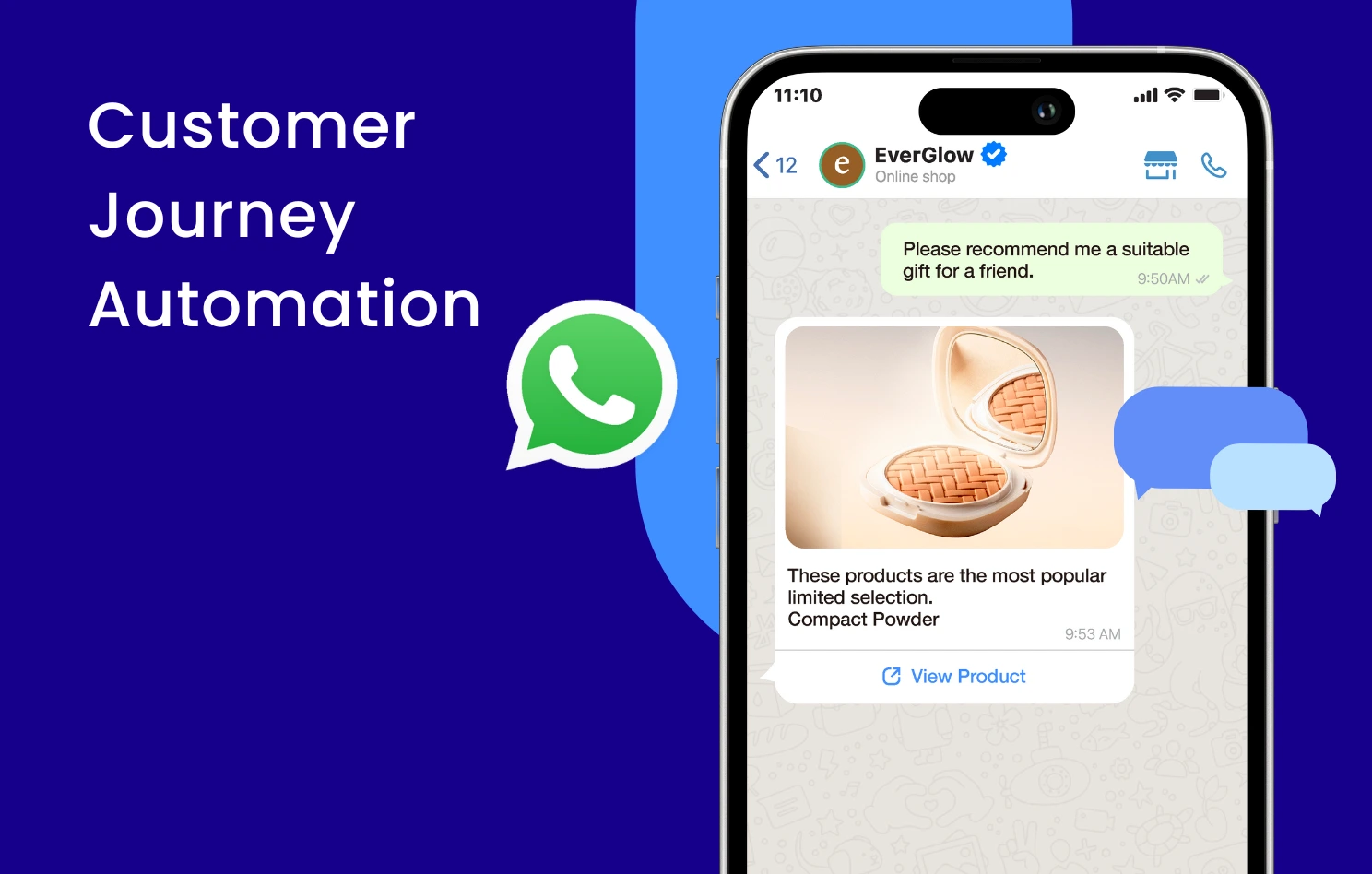
An omnichannel customer journey also supports coordinated messaging across platforms. For example, a customer who browses a product on a website can later receive a personalised WhatsApp message, followed by an email reminder or an in-store prompt, all driven by the same customer journey marketing automation logic. This level of coordination is difficult to achieve when channels operate in isolation.
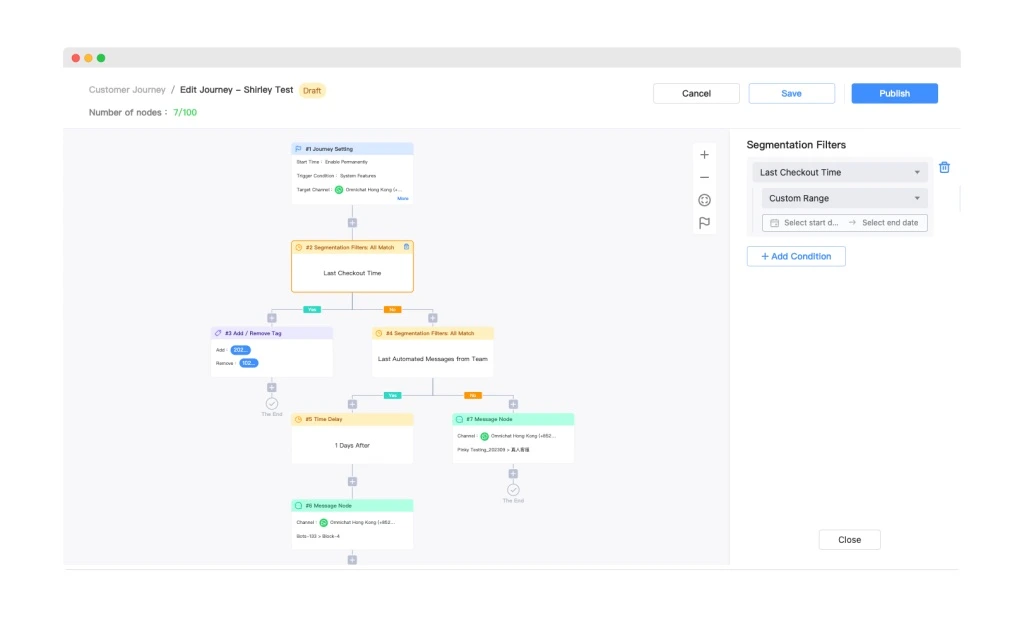
For businesses, the impact goes beyond operational efficiency. Customer journey automation helps increase engagement, improve conversion rates, and strengthen long-term customer relationships by aligning messaging with real customer intent rather than fixed campaign schedules.
What Are the Best Practices for Building an Omnichannel Customer Journey?
By utilising various journey triggers, actions, and segmentation, various marketing goals can be achieved across different industries. Below, through 8 best practice examples applied in beauty, fashion, FMCG, and travel industries, you’ll gain a clearer understanding of the applications of the customer journey.
1. How Can WhatsApp Surveys Trigger Automated Store Visits?
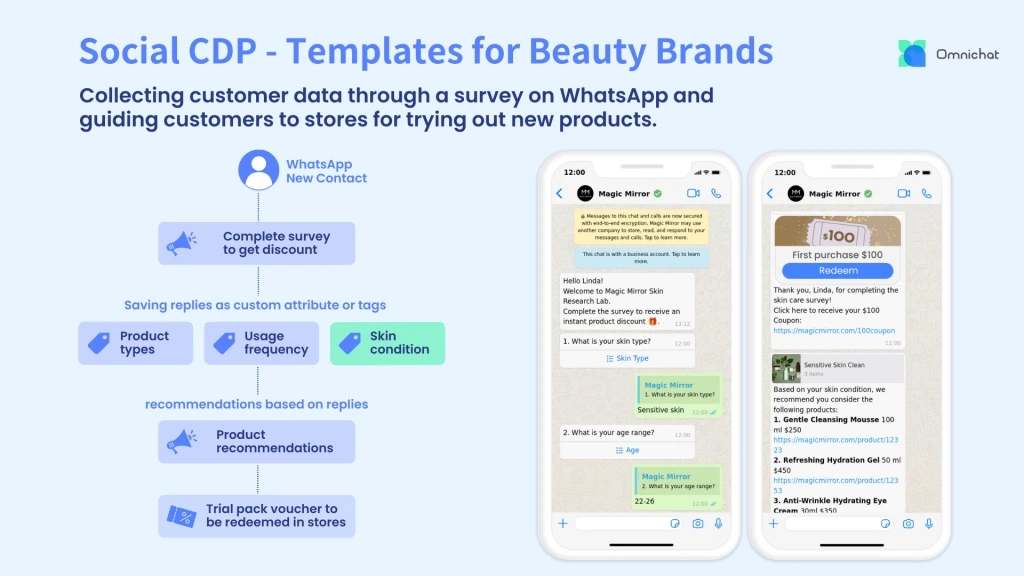
WhatsApp-based surveys combined with customer journey automation allow businesses to capture first-party data, personalise product recommendations, and guide customers from digital conversations to in-store visits through behaviour-triggered messaging.
When a customer joins a brand’s official WhatsApp account, businesses can invite them to complete a short survey in exchange for a coupon or incentive. Survey responses can then be used to automatically identify customer preferences, recommend relevant products, and tag customers for future remarketing within an automated customer journey.
To encourage offline conversion, brands can go beyond standard online discounts by offering store-exclusive coupons that are redeemable only at physical locations. This approach helps bridge the gap between digital engagement and in-store experiences, while giving customers a clear reason to visit. In-person interactions also allow customers to better understand product features, benefits, and suitability before making a purchase.
Journey setup example
- Journey Trigger: when a customer interacts with your WhatsApp as a new contact.
- Journey Goal: collecting customer data and directing customers to brick-and-mortar stores.
2. How Can Customer Journey Automation Drive Repeat Purchases Based on Usage Cycles?
Customer journey automation enables businesses to increase repeat purchases by triggering personalised reminders based on product usage cycles, using purchase data from ecommerce systems, CRM platforms, and customer data platforms such as a Social CDP.
After customer purchase data is integrated into the Social CDP, businesses can define journey triggers such as checkout completion or purchase of a specific product. These triggers allow an automated customer journey to start immediately after a customer’s first purchase.
Based on the expected usage cycle of the product, repurchase reminders can then be scheduled and delivered automatically at the most relevant time. Instead of relying on generic promotional broadcasts, businesses can remind customers to restock or repurchase when the product is likely running low, increasing relevance and conversion potential.
Journey setup example
- Journey Trigger: when a customer purchases a specific product.
- Journey Goal: increase the customer repurchase rate.
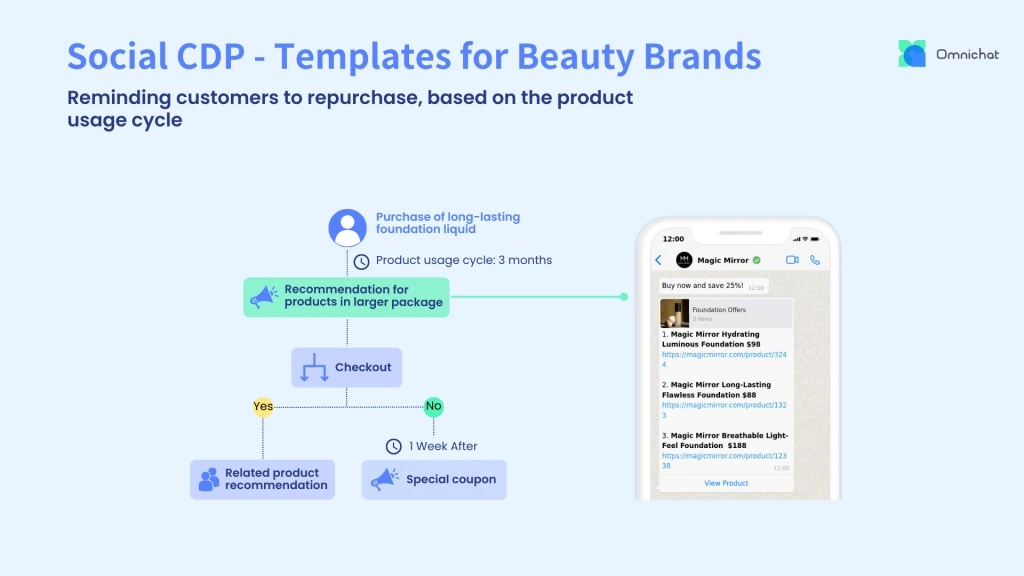
Industries with high repeat demand, such as beauty and personal care, benefit particularly from this approach. By combining purchase history with customer journey marketing automation, brands can maintain ongoing engagement with customers, improve retention, and generate predictable repeat revenue without manual campaign execution.
3. How Can Automated Customer Journeys Guide Online Customers to Physical Stores?
Automated customer journeys enable businesses to convert online shoppers into in-store customers by using behaviour-based triggers, such as website purchases, to deliver timely incentives that drive offline visits and higher lifetime value.
Brands that operate both ecommerce websites and physical stores often see stronger results from customers who purchase across multiple channels. Research across retail consistently shows that omnichannel customers tend to spend more and demonstrate higher brand loyalty than single-channel buyers. As a result, guiding online customers toward in-store experiences is a core objective of an effective omnichannel customer journey.
Through customer journey automation, businesses can reach customers online at scale while encouraging offline conversion at the right moment. You could reach a broad potential customer base online and achieve a better conversion rate and order value offline. The journey can assist your brand in diverting online customers to make purchases at physical stores. For example, you can target online customers to shop in your offline stores by sending them coupons for offline purchases.
Customers who engage both online and offline are often high-affinity customers. Once they become omnichannel customers, brands can deepen relationships further by introducing referral programmes such as MGM (member-get-member) rewards, loyalty benefits, or exclusive campaigns designed for their most engaged audience.
Journey setup example
- Journey Goal: attract online customers to try in-store purchases, increasing conversion rate and order value.
- Journey Trigger: when a customer completes the checkout online.
- Journey Segmentation: purchased offline or not
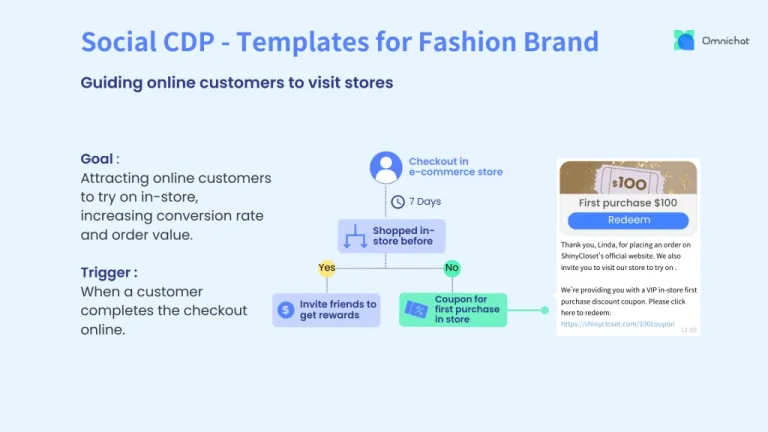
By combining ecommerce data with automated customer journeys, brands can systematically move customers across channels, improve overall conversion performance, and build stronger long-term customer relationships.
4. How Does A/B Testing Improve Customer Journey Automation for Hesitant Customers?
Do you have any flagship products?
How do you boost the conversion rate?
Try to retarget potential customers with different content!
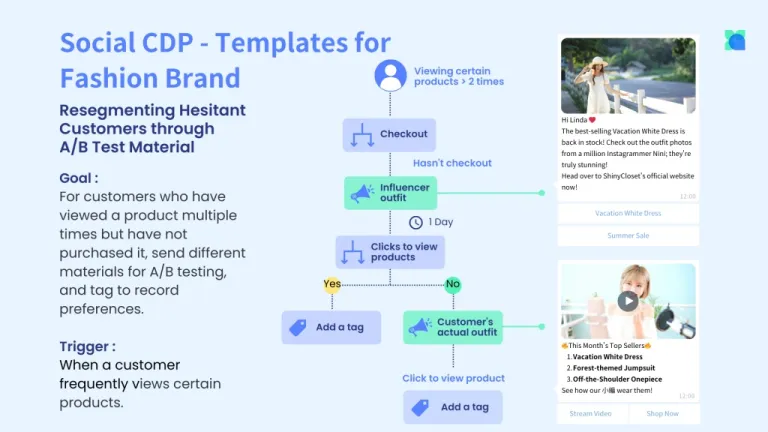
For example, you could target customers who have viewed the product multiple times but haven’t made a purchase. And then broadcast with KOL outfit photos and the consumer’s actual outfit videos. Then, you will know which kind of content makes better performance. Also, you couldrecord the preferences of each customer by tags.
- Journey Goal: boost sales of hero products and collect customer preferences for different content types.
- Journey Trigger: view a specific product page for more than 2 times.
- Journey Segmentation: click retargeting messages.
5. How Can Customer Journey Automation Grow WhatsApp and Website Memberships?
Is your product listed on some retail platforms or channels not owned by you, such as convenience stores or supermarkets? You may notice that while these channels may contribute to your sales volume, they often don’t share consumer data and insights.
In recent years, an increasing number of brands have transitioned from purely channel-based operations to a direct-to-consumer (DTC) approach. This enables them to gain first-hand insights and feedback by directly interacting with their customers.
As brands begin to manage social communities and their media, the question arises: how can I get the contacts of customers from these channels?
Try to print a QR code on your product packing and guide consumers to your official WhatsApp account!
Meanwhile, by attaching product tags, brands can use these labels to send targeted messages in the future.
- Journey Goal: guide customers from distribution channels to your WhatsApp, while also collecting customer preferences.
- Journey Trigger: scan the QR code on the product packaging.
6. How Can WhatsApp Journeys Encourage First-Time Purchases?
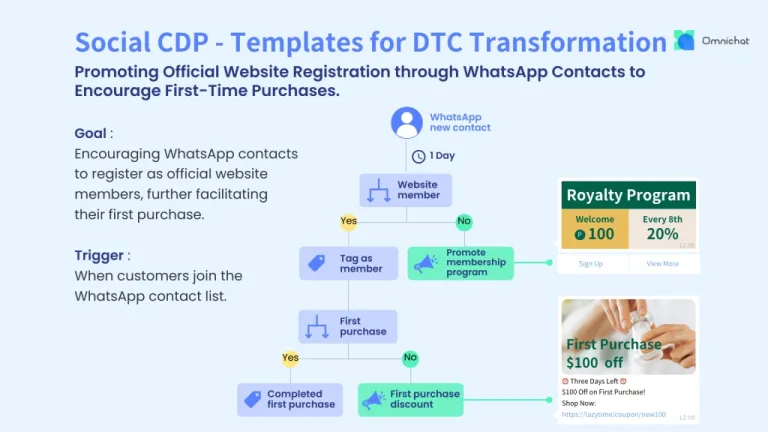
In addition to guiding customers to your official WhatsApp account, if you also have your e-commerce website, you can further encourage customers to register and shop on the official website and shop.
By integrating e-commerce membership systems with Social CDP, one can identify contacts in the customer journey who have not registered on the official website and promote the membership program to them. Following that, one can filter out members who haven’t made their first purchase and remind them to utilise their first-purchase discounts.
- Journey Goal: encourage WhatsApp contacts to register as official website members and further complete their first purchase.
- Journey Trigger: the customer becomes a social contact.
- Journey Segmentation: whether they are official website members and whether they’ve completed their first purchase.
7. How Can Automated Surveys Deliver Personalised Product Recommendations?
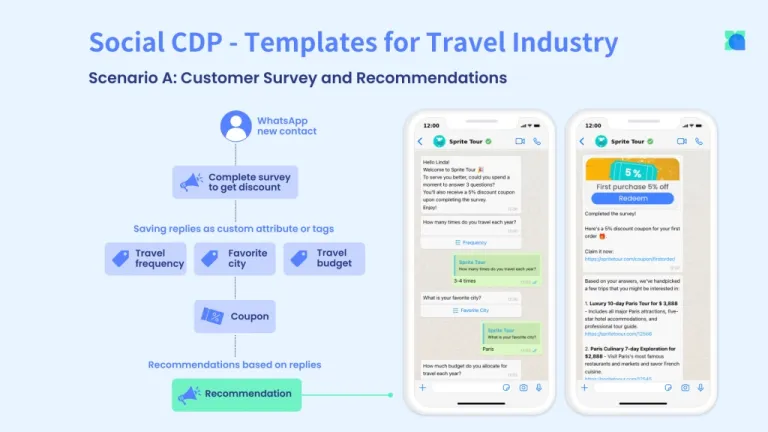
You can attract your WhatsApp contacts tocomplete a survey by offering coupons. Through this, you can collect key information such as travel frequency, favourite cities, and travel budget. Based on customer preferences, you can then recommend relevant travel itineraries accurately.
- Journey Goal: collect customer preferences and guide them precisely.
- Journey Trigger: join as a WhatsApp contact.
8. How Do Birthday Triggers Fit Into Customer Journey Automation?
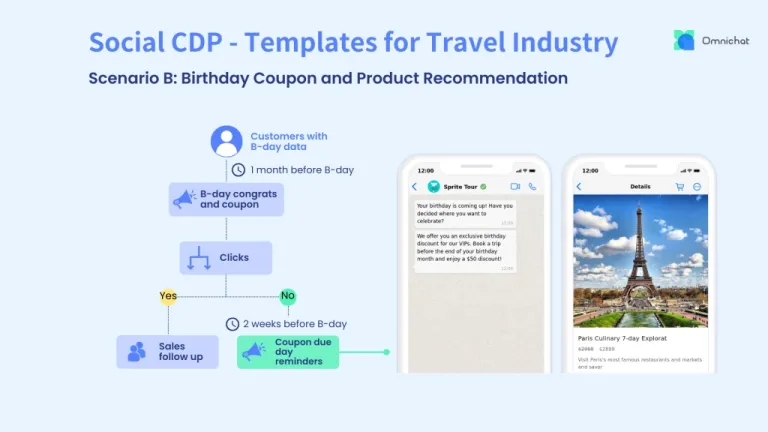
In addition to national holidays, many people also buy more or travel on special occasions like birthdays and anniversaries. Sending promotional messages at the right moment can enhance marketing effectiveness.
By integrating CRM system data through Social CDP, you can use specific dates such as anniversaries or birthdays as a time reference point in the customer journey. This allows for timely recommendations of suitable products.
- Journey Goal: target customers approaching their wedding anniversary with precise recommendations.
- Journey Trigger: when the wedding anniversary date is added to the profile attributes, automatically schedule a personalised message.
What Marketing Goals Can Businesses Achieve With Omnichannel Customer Journey Automation?
With Omnichat Social CDP, you can integrate customer data from multiple channels, including social media, e-commerce, and membership information. Not only can you consolidate it into a 360-degree customer profile, but you can also use these customer behaviours and data records as triggers and segmentations for automated customer journeys. Moreover, you can send personalised messages based on these conditions to achieve various marketing objectives.
Schedule a meeting with Omnichat Social CDP experts now to understand how to use Social CDP and Customer Journey to elevate your sales and customer relationship management!
Book a Consultation