Since the advent of ChatGPT in 2022, it has set off a global AI research and development boom; in 2024, generative AI, extended reality (XR), high-performance computing (HPC), and the application of AI in energy management and health technology have all made great progress. By 2025, known as the “first year of AI application,” the application of artificial intelligence technology will move from the technology exploration stage to large-scale implementation and industrialisation: from daily life, health care, cutting-edge technology to e-commerce operations, AI will play a pivotal role.
The rapid development of AI technology has enabled more e-commerce platforms to use AI tools to improve sales results, optimise customer experience, and strengthen customer relationship management. AI can help brands achieve more accurate operational decisions and effectively increase conversion rates through automated data analysis, machine learning and intelligent predictions. The following will introduce key applicationsof AI across the e-commerce customer journey. We will analyse several crucial stages – from initial customer acquisition and activation through to ongoing interaction, revenue generation, and finally, customer referral (often termed Member-Get-Member or MGM). For each stage, the discussion will detail the specific role AI plays, identify relevant tools and technologies, and evaluate its overall impact and effectiveness.
AI optimisation in advertising, membership management, and shopping experience
AI advertising optimisation
For the advertising teams or marketers of e-commerce brands, the most common problems with advertising include: insufficient audience targeting, advertising creatives that fail to effectively resonate with the target audience, and poor bidding strategies that lead to wasted budgets, resulting in unsatisfactory advertising results. Especially after the release of iOS 14.4, restrictions were imposed on Meta ad tracking, which once reduced advertising effectiveness and became a common pain point for marketers.
AI can automatically analyse the browsing history, clicks, shopping history and interest tags of website or App users, conduct precise audience analysis, target high-conversion rate audiences, and increase order conversion rates. At the same time, through machine learning, AI dynamically adjusts advertising budgets, optimises bids based on the expected conversion value of different audiences, improves advertising efficiency, and reduces unnecessary budget waste.
In addition, AI can automatically test and find the most effective combination of creative and copywriting with the goal of increasing click-through rate (CTR). AI predictive analysis also enables the dynamic development of optimised advertising bidding strategies. For example, Google Ads’ smart bidding can automatically adjust bids to obtain a higher return on investment (ROI), changing the performance fluctuations caused by manual reliance on the experience of media buyers in the past.
Overview of AI advertising application tools
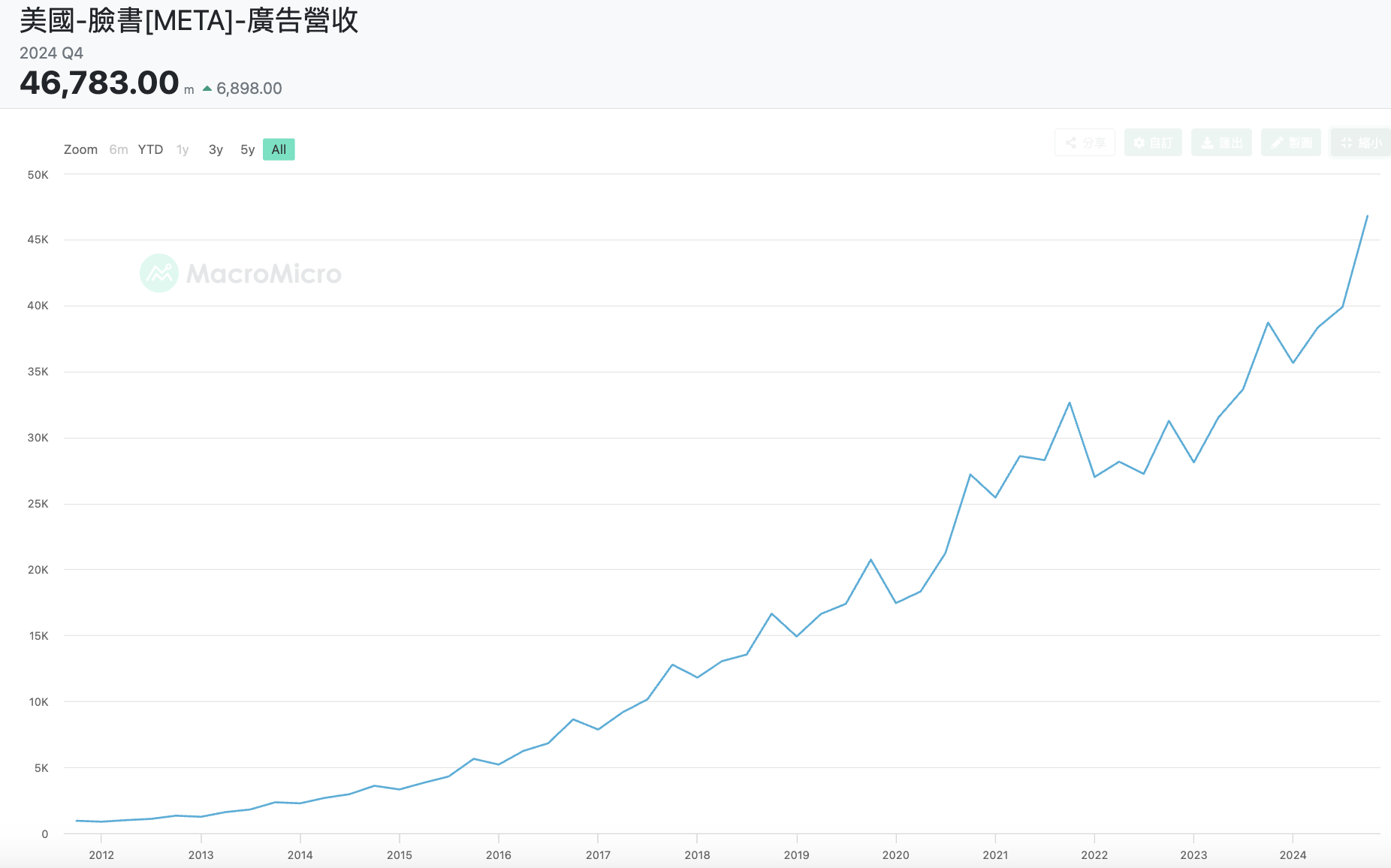
AI optimisation capabilities have now become integral features within mainstream advertising platforms. No matter it is Google Ads (Continue to invest a lot of AI research and development in its smart bidding, audience analysis, etc.) , Meta Ads (In response to privacy policy changes through functions such as dynamic advertising, A/B testing, AI material generation and similar audience expansion, its revenue growth in recent years also reflects market recognition), or TikTok Ads (Leveraging its huge user base and AI-driven audience prediction and interest tag analysis to form unique advantages), both are committed to using AI to improve advertising effectiveness. In addition, there are also many professional advertising technology partners (such as adGeek, Appier, etc.) that provide AI-driven advertising solutions.
Omnichat’s smart ad optimisation solution
Omnichat supports the circulation of audience data between WhatsApp and the Meta advertising platform, allowing you to make good use of valuable WhatsApp first-party data to attract more precise Meta advertising audiences:
- Conditional filtering: Based on WhatsApp interaction behaviour, tags and other data, filter out target audiences that meet specific conditions.
- Create an Audience Pack: Export the filtered target objects into audience packs.
- WhatsApp broadcast messages: Use audience packs to broadcast WhatsApp messages.
- Upload and create lookalike audiences: Upload audience packs with ideal performance (or specific conditions) to Meta and create a lookalike audience.
- Precise placement and continuous optimisation: Use these highly relevant similar audiences for advertising, conversion data returned through methods like the Conversion API (CAPI) allows the advertising platform’s AI to persistently learn and refine audience models, expand efficient traffic pools, and continuously improve advertising conversion results.
AI and member management
AI can conduct in-depth analysis of customer data to accurately segment members and formulate exclusive discount plans from multiple dimensions such as purchase frequency, preferred categories, and overall spend value. This not only avoids possible deviations in manual interpretation of data, but also ensures that the marketing activities or discounts provided truly meet the interests and needs of members at different levels, allowing the marketing budget to be well spent and eliminating the inefficiency inherent in untargeted, mass-market (“spray and pray”) approaches. . The ultimate goal is to enhance member retention, boost repurchase frequency, and significantly extend customer lifetime value (CLV / LTV).
For sleeping and inactive users, AI can predict churn risks based on past behaviour patterns and proactively send remarketing push messages, such as birthday offers, exclusive discounts, and personalised recommendations, to activate sleeping customers, reduce churn rates, and increase member retention rates.
Finally, implementing an AI-driven customer marketing automation system enables businesses to engage members effectively across both owned media channels (such as Email, SMS, and WhatsApp broadcast notifications) and paid media platforms (including Meta Ads and the Google Display Network). By analysing customer behaviour, the system intelligently predicts likely product or service preferences, automatically triggering highly personalised marketing messages or advertising content. This targeted approach demonstrably boosts engagement rates and drives revenue growth, whilst significantly reducing manual operational costs and enhancing overall customer satisfaction.
AI membership management application tool
There are many tools on the market that apply AI to membership operations, such as Salesforce Marketing Cloud (which provides comprehensive CRM and marketing automation functions), Klaviyo (which specialises in e-commerce Email/SMS automated marketing and is deeply integrated with platforms such as Shopify), Zendesk Chatbot (which focuses on using AI to improve customer service efficiency and experience), etc. Selecting the most suitable tool ultimately depends on a careful evaluation of an organisation’s specific requirements and its existing technology infrastructure.

Omnichat Social CDP integrates social footprints to achieve customer 360
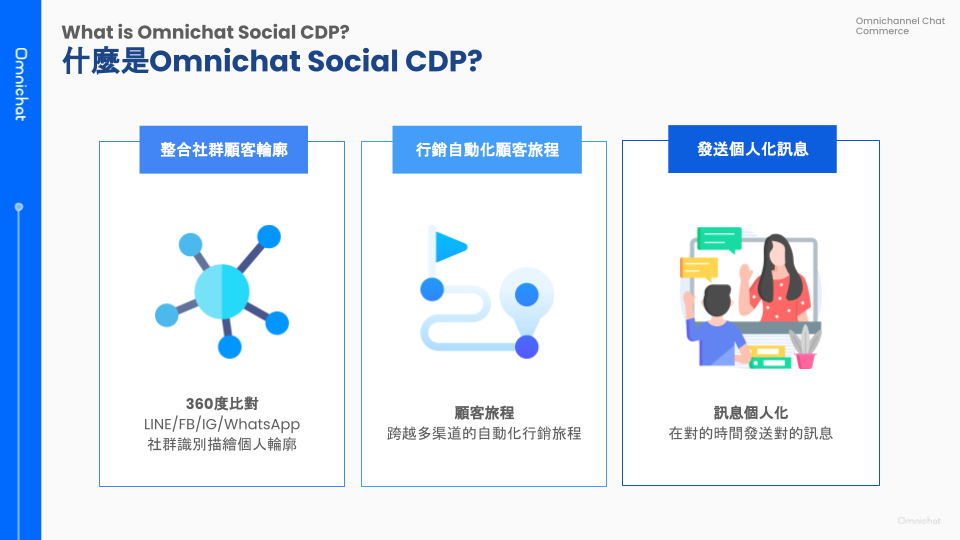
Omnichat’s Social CDP (Customer Data Platform) is a customer data platform designed specifically for social e-commerce and multi-channel customer service. It helps brands integrate customer data from social platforms such as WhatsApp, Facebook Messenger, Instagram, LINE, etc. By consolidating interactions and data points across these channels, the platform overcomes data silos to establish a comprehensive, 360-degree omni-channel customer profile. This unified view subsequently empowers businesses to execute highly personalised marketing campaigns, leveraging AI and automation to ultimately increase sales conversion rates.
1. Integrate social customer profiles:
Unified management from WhatsApp、 Facebook, Instagram, LINE, website live chat let customer information not be scattered across different platforms. Automatically integrate customer conversations, purchase history, and interaction records into the same CRM interface.

2. Marketing automation customer journey:
Based on changes in customer interaction status (such as completing checkout, membership upgrade, tagging, etc.), automatically start a personalised interactive journey to deepen customer relationships, brand loyalty, and create a customer repurchase cycle. Set up automatic replies, remind shopping carts for outstanding purchases, provide exclusive discount codes, etc. to increase customer conversion rates.
For example: Shopping cart unchecked reminder: When a customer places items in their basket but leaves the site without finalising the purchase, , the system will automatically send a message reminder.
Member birthday offers: Use WhatsApp to automatically push birthday discount codes based on CDP data.
3. Sending personalised messages:
Automatically classify customers based on customer behaviour (such as browsed products, conversation, purchase frequency), label their browsing history and favorite products, and send personalised messages to achieve precise marketing.
AI shopping experience optimisation
AI can infer customers’ product and service preferences based on their browsing history, purchasing behaviour, and frequency on the official website and APP, provide personalised recommendations, and enhance the shopping experience. Many service providers on the market already provide such solutions to help e-commerce and retail businesses increase average order value (AOV).
In addition, AI image search technology (such as Google Lens, Syte) is also commonly used in the market, allowing customers to quickly find similar products by uploading images and searching for products through images. In terms of content and SEO, it is common for brands to use generative AI to optimise product descriptions and automatically generate titles to help SEO optimisation and improve search engine rankings.
Omnichat AI shopping experience optimisation solution
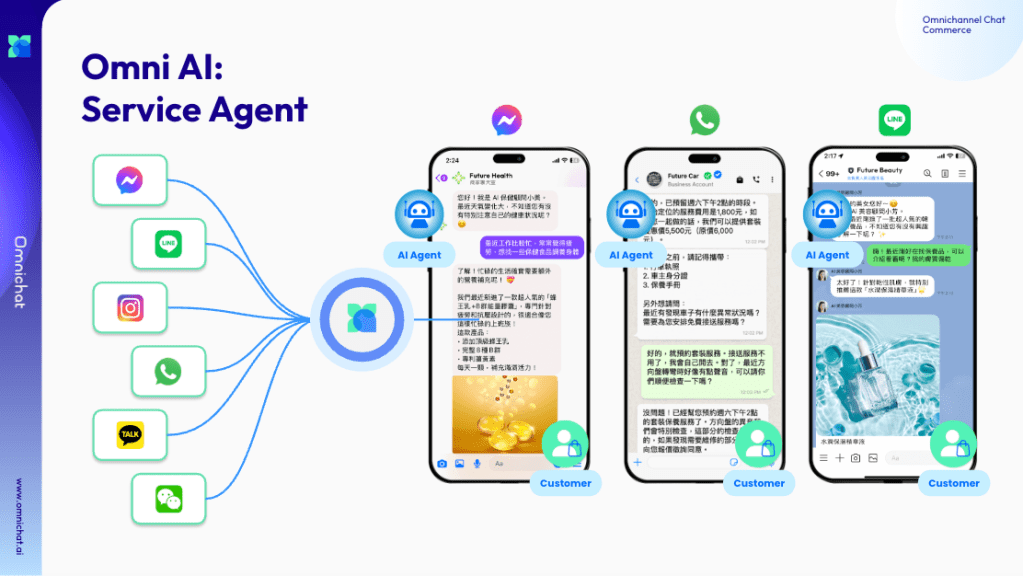
Omnichat is set to launch Omni AI, a new enterprise-grade service designed to help brands implement powerful AI SaaS capabilities without requiring in-house development resources. This upcoming service will enable businesses to seamlessly integrate various messaging channels.
Leveraging its AI agents, Omni AI will automatically identify customer needs during shopping journeys and interactions, facilitating relevant and timely product recommendations.The core benefit lies in empowering brands – particularly larger organisations – to easily deliver a highly personalised customer experience, enhancing engagement and support consistently across all integrated touchpoints.
Application and value of AI sales

What is AI sales?
AI Sales is an intelligent system that uses AI technology to optimise the sales process system, combining Machine Learning (ML), Natural Language Processing (NLP), Predictive Analytics and other technologies to help companies improve sales efficiency, optimise customer experience, and increase conversion rates.
These modules are usually integrated in CRM (customer relationship management system), marketing automation, online store, using AI technology to have sales forecasts ,personalised recommendation and interacting with customers.
How AI sales helps e-commerce and retail brands
AI Sales Module can be applied to e-commerce, physical retail brands, B2B and DTC (Direct-to-Consumer) businesses. It mainly helps brands improve sales conversion and customer loyalty. In addition to the above-mentioned help in advertising, membership management, and shopping experience, there are several key applications:
1. Personalised product recommendations
AI sales can predict the most suitable products based on users’ browsing behaviour, shopping records, and interest tags, and provide instant recommendations.
2. Intelligent sales/inventory forecasting management (Sales Forecasting)
Based on the platform’s own historical sales data, market trends, and consumer behaviour, it provides predictive insights into future sales, including sales cycle forecasts, performance projections for specific timeframes, and predictions for peak and off-peak seasonal activity. to help brands optimise stocking strategies, reduce inventory backlogs and out-of-stock risks, and improve the accuracy of revenue forecasts.
3. Dynamic pricing and promotion optimisation
Through the collection of big data, and based on market demand, competitor prices, and consumer behaviour, commodity prices are automatically adjusted to ensure maximum profits. For example, Agoda, a well-known travel platform, uses a dynamic price change model to allow customers from different channels, different times, and different marketing sources to combine multiple factors to allow each customer to open the App and enjoy different room prices. Furthermore, the pricing strategy often differentiates between customer segments, taking loyalty status into account to potentially offer distinct rates or benefits to new versus existing members, for optimising revenue and occupancy, whilst carefully managing overall profit margins.
Omni AI Studio: Use customised AI Agent to create exclusive sales for each brand
Omni AI Studio will be launched in 2025 and is expected to create exclusive AI Agents for brands. Customer service, shopping experience optimisation, personalised member marketing, smart store applications, product recommendation systems, and even advertising audience refinement can more closely fit your own unique sales and customer service needs to achieve highly customised and flexible AI-driven sales operations.

AI technology has become a key engine for promoting the development of digital marketing and e-commerce. It can help brands improve customer experience, optimise marketing strategies, and automate customer services. It has also become an important tool for e-commerce platforms to increase sales. In the future, it will further develop smart and personalised shopping services to enhance brand competitiveness. AI sales is expected to help e-commerce brands and retail companies Improve sales conversion, accurately predict market trends, automate marketing and sales follow-up, allow brands to operate more efficiently, and provide personalised shopping experiences. This not only increases revenue but also strengthens customer loyalty, making it an indispensable AI tool for modern enterprises.
Book a Consultation